Transforming Teaching Practices
| Описание события | Transforming Teaching Practices: The Impact of Computational Thinking through Wikis and Turtles
Computational thinking (CT) has emerged as a fundamental skill for educators across disciplines, enabling them to approach problem-solving in innovative ways. This presentation explores the integration of CT into teaching practices through the use of socio-technical systems like wikis and multi-agent modeling environments such as turtles. By leveraging platforms like the Semantic MediaWiki from digida.mgpu.ru, educators can create collaborative learning experiences that enhance students' understanding of complex systems and algorithms. The presentation will showcase practical examples of how Semantic MediaWiki facilitate knowledge sharing among teachers, while turtles and other agents provide dynamic simulations that allow students to visualize and manipulate variables in real-time. Together, these tools not only enrich the educational landscape but also empower teachers to cultivate a classroom culture that embraces computational thinking as a core competency. After working with Semantic MediaWiki and NetLogo or StarLogo Nova turtles, teachers' mindsets have shifted, and they now view their school classes as complex adaptive systems, using the agent-based modeling (ABM) approach in their pedagogical design. |
|---|---|
| Тип события | Доклад |
| Начало | 2024-09-19T12:40:35.000Z |
| Окончание | 2024-09-19T14:10:35.000Z |
| color | green |
| Адрес события | |
| Видео запись события | |
| Среды и средства, которые использовались в рамках события | Semantic MediaWiki, Netlogo, Snap! |
| Формируемые в рамках события компетенции | |
| Область знаний | |
| Местоположение | 55° 50' 0.90" N, 37° 38' 42.80" E |
| Формат реализации |
Transforming Teaching Practices: The Impact of Computational Thinking through Wikis and Turtles
Introduction to Computational Thinking
Computational thinking (CT) is not a new concept; it has roots in the ideas of pioneers like Seymour Papert, Marvin Minsky, and others. Their vision emphasizes that significant ideas have a rich history, as Ivan Illich noted. Understanding this history allows educators to appreciate how CT can transform teaching practices today and shape the future of education.
Defining Computational Thinking
CT combines human capabilities with computational tools, enabling effective communication with computer programs. As Larry Wall stated, successful communication between programs requires strictness in output and openness in input. This principle highlights the need for educators to adopt a similar mindset when engaging with technology in the classroom.
Collaborative Teacher Activities
Through Semantic MediaWiki, we organize teacher activities that facilitate collaboration among educators and software agents. This experience fosters an understanding of complex systems where both human and computer contributions are equally valuable. The Media Equation theory suggests that we treat programs with the same care and attention as we do other people.
| Description | |
|---|---|
| The Media Equation: How People Treat Computers, Television, and New Media Like Real People and Places | Многочисленные примеры, подтверждающие, что люди воспринимают компьютерные программы, машины и радиопередачи так, как будто это живые и человеческие существа. |
Hybrid Systems in Action
Using examples from Semantic MediaWiki, we demonstrate the productivity of hybrid systems that integrate human and computer interactions. Drawing from the Principia Cybernetica Web, teachers can collaboratively create texts and diagrams while observing code execution results directly on wiki pages, enhancing their understanding of complex concepts.
| Description | |
|---|---|
| Principia Cybernetica Web | Сообщество исследователей, объединенных идеей метаперехода на уровень суперорганизма, в котором люди объединены телекоммуникационными связями и цифровыми объектами |
The Active Essay Concept
The "Active Essay" technology, as described by Alan Kay, represents a new literacy form that merges written content with live simulations and interactive programs. This approach allows readers to engage deeply with dynamic systems by manipulating simulations and code, providing hands-on experience with the subject matter.
| Description | |
|---|---|
| Dawkins Weasel | Модель «Weasel» иллюстрирует принцип кумулятивного отбора, демонстрируя, как последовательные мутации и отбор ближайших по сходству к целевой фразе строк приводят к её быстрому «эволюционному» воспроизведению. Модель представляет нематериальный «вид» строк фиксированной длины, состоящих из заглавных букв английского алфавита и пробелов. При запуске:
|
| Активное эссе | Active Essays -термин Алана Кея «активное эссе», где виды изложения и аргумента, которые можно ожидать в эссе, усиливаются благодаря тому, что интерактивная программа является одним из многих типов медиа для нового типа документа. Активное эссе использует программирование для создания интерактивных документов, где текстовое описание научного концепта может быть соединено с симуляцией, позволяющей читателю экспериментально исследовать этот концепт. Активное эссе включает модифицируемые программные объекты, которые читатель может изменять для исследования представленных идей. |
Multi-Agent Models in Education
The platform digida.mgpu.ru showcases numerous examples of multi-agent models created using Scratch, Snap!, StarLogo Nova, and NetLogo. These models enable teachers to discuss, analyze, and experiment with various complex systems, reinforcing the principles of organizational structures within complex adaptive systems.
Rethinking Classroom Dynamics
The shadow course offered through digida.mgpu.ru encourages educators to conceptualize their classrooms as networks or complex adaptive systems. By viewing a classroom of 25 students as a cohesive network rather than isolated individuals or pairs, teachers can foster a more interconnected learning environment.

Modeling Tools for Pedagogical Design
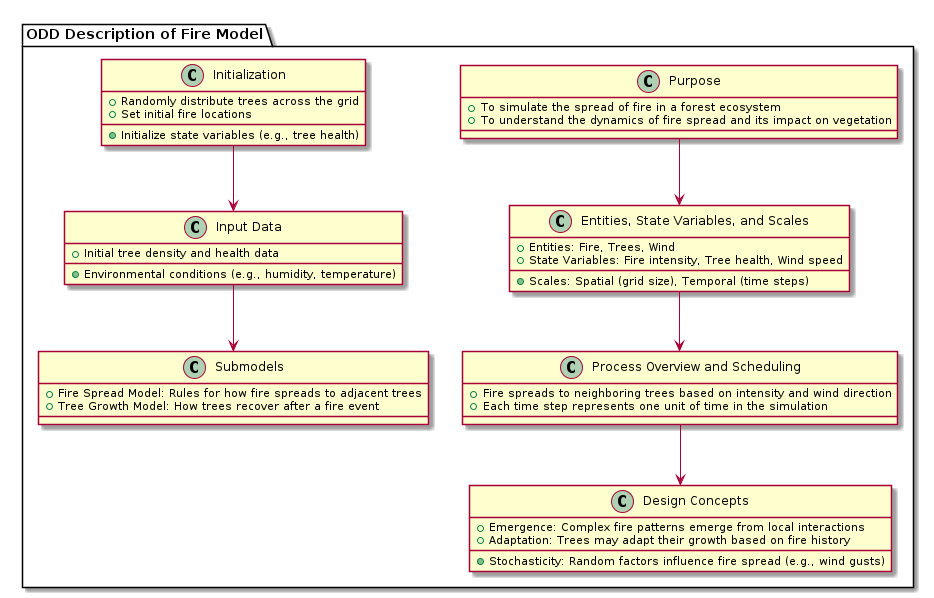
In this shadow course, modeling tools such as PlantUML and agent-based modeling protocols like ODD are employed to describe and design learning practices within classrooms. These tools help educators visualize relationships and processes within their teaching methodologies, enhancing their pedagogical strategies.
The Overview, Design concepts and Details (ODD) protocol for describing Individual- and Agent-Based Models (ABMs) is now widely accepted and used to document such models in journal articles.
The Importance of Collaboration
Collaborative environments supported by Semantic MediaWiki empower teachers to share insights and resources effectively. By working together within these platforms, educators can develop a shared understanding of CT principles while creating a repository of knowledge that benefits the entire educational community.
Conclusion: Embracing Computational Thinking
As we transform teaching practices through computational thinking via wikis and turtles, we create dynamic learning environments that prepare students for future challenges. By embracing these innovative approaches, educators can cultivate critical thinking skills essential for navigating an increasingly complex world.

Embracing Generative AI in Education
In the realm of wikis and turtles, we actively harness the capabilities of generative AI to create text, models, and diagrams. This innovative approach redefines the concept of "one laptop per child" to "one generative AI per child," emphasizing that both teachers and students can utilize the same generative AI tools at school and home.
This integration of generative AI as distinct actors for both educators and learners presents a transformative scenario for education. It mirrors the traditional "1 student: 1 computer" model, where the focus is not only on individual access to technology but also on the seamless use of these tools for educational and everyday tasks. This shift blurs the lines between home and school, fostering a more holistic learning experience.
However, this framework raises critical questions about the future of education. As generative AI becomes a staple in learning environments, we must consider its implications on teaching practices, student engagement, and the overall educational landscape. By embracing generative AI thoughtfully, we can enhance personalized learning while addressing potential challenges related to equity, ethics, and academic integrity.