Участник:KsuStep: различия между версиями
Материал из Поле цифровой дидактики
Patarakin (обсуждение | вклад) |
Patarakin (обсуждение | вклад) |
||
| Строка 30: | Строка 30: | ||
{{#get_web_data:url=http://www.uic.unn.ru/pustyn/data-sets/digida/ACM_think.csv | {{#get_web_data:url=http://www.uic.unn.ru/pustyn/data-sets/digida/ACM_think.csv | ||
|format=csv with header | |format=csv with header | ||
|filters=Publication Year=2018 | |||
|data=Title=Title,Pub_Title=Publication Title,Author=Author,Abstract=Abstract Note,URL=Url | |data=Title=Title,Pub_Title=Publication Title,Author=Author,Abstract=Abstract Note,URL=Url | ||
}} | }} | ||
Текущая версия от 19:46, 8 сентября 2026

| Описание участника | |
|---|---|
| Область знаний | Психология, Лингвистика, Искусственный интеллект, Филология |
| Веб-сайт | |
| Видео запись | |
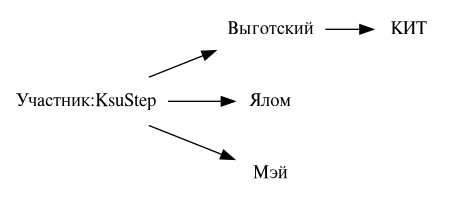
| Кто оказал влияние (учителя) из Категория:Person |
Выготский, Ялом, Мэй |
| Понятия, которые интересуют из Категория:Понятие |
|
| Среды и средства, которые использует из цифровых средств или игр или книг |
|
| Позиция (положение) | Магистратура |
| Профиль подготовки | Психология |
| Педагогическая направленность | Нет |
| Принадлежность к организациям (сообщества) | |
| Виды спорта, которыми занимается | |
| Проекты, статьи и рецепты, над которыми работает |
Graphviz
| Название | Издание | Авторы | Содержание | URL |
|---|---|---|---|---|
| Introductory Programming: A Systematic Literature Review | Proceedings Companion of the 23rd Annual ACM Conference on Innovation and Technology in Computer Science Education | Luxton-Reilly, Andrew; Simon; Albluwi, Ibrahim; Becker, Brett A.; Giannakos, Michail; Kumar, Amruth N.; Ott, Linda; Paterson, James; Scott, Michael James; Sheard, Judy; Szabo, Claudia | As computing becomes a mainstream discipline embedded in the school curriculum and acts as an enabler for an increasing range of academic disciplines in higher education, the literature on introductory programming is growing. Although there have been several reviews that focus on specific aspects of introductory programming, there has been no broad overview of the literature exploring recent trends across the breadth of introductory programming. This paper is the report of an ITiCSE working group that conducted a systematic review in order to gain an overview of the introductory programming literature. Partitioning the literature into papers addressing the student, teaching, the curriculum, and assessment, we explore trends, highlight advances in knowledge over the past 15 years, and indicate possible directions for future research. | https://doi.org/10.1145/3293881.3295779 |
| A Survey of Computational Kits for Young Children | Proceedings of the 17th ACM Conference on Interaction Design and Children | Yu, Junnan; Roque, Ricarose | This paper presents a survey of computational kits that enable young children (ages 7 years old and under) to explore computing ideas and practices. We examined physical, virtual, and hybrid kits across three different perspectives: how they are designed, how they support children to explore computational concepts and practices, and how they enable children to engage in a range of projects and activities. Based on our analysis, we present design suggestions and opportunities to expand the possibilities in how children can engage in computing, what kinds of projects children can make, and what kinds of computational ideas children can explore. | https://doi.org/10.1145/3202185.3202738 |
| Non-Native English Speakers Learning Computer Programming: Barriers, Desires, and Design Opportunities | Proceedings of the 2018 CHI Conference on Human Factors in Computing Systems | Guo, Philip J. | People from nearly every country are now learning computer programming, yet the majority of programming languages, libraries, documentation, and instructional materials are in English. What barriers do non-native English speakers face when learning from English-based resources? What desires do they have for improving instructional materials? We investigate these questions by deploying a survey to a programming education website and analyzing 840 responses spanning 86 countries and 74 native languages. We found that non-native English speakers faced barriers with reading instructional materials, technical communication, reading and writing code, and simultaneously learning English and programming. They wanted instructional materials to use simplified English without culturally-specific slang, to use more visuals and multimedia, to use more culturally-agnostic code examples, and to embed inline dictionaries. Programming also motivated some to learn English better and helped clarify logical thinking about natural languages. Based on these findings, we recommend learner-centered design improvements to programming-related instructional resources and tools to make them more accessible to people around the world. | https://doi.org/10.1145/3173574.3173970 |
| From Computational Thinking to Computational Empowerment: A 21st$ Century PD Agenda | Proceedings of the 15th Participatory Design Conference: Full Papers - Volume 1 | Iversen, Ole Sejer; Smith, Rachel Charlotte; Dindler, Christian | We propose computational empowerment as an approach and a Participatory Design response to challenges related to digitalization of society and the emerging need for digital literacy in K12 education. Our approach extends the current focus on computational thinking to include contextual, human-centred and societal challenges and impacts involved in students' creative and critical engagement with digital technology. Our research is based on the FabLab@School project, in which a PD approach to computational empowerment provided opportunities as well as further challenges for the complex agenda of digital technology in education. We argue that PD has the potential to drive a computational empowerment agenda in education by connecting political PD with contemporary visions for addressing a future digitalized labour market and society. | https://doi.org/10.1145/3210586.3210592 |
| Bots & (Main)Frames: Exploring the Impact of Tangible Blocks and Collaborative Play in an Educational Programming Game | Proceedings of the 2018 CHI Conference on Human Factors in Computing Systems | Melcer, Edward F.; Isbister, Katherine | While recent work has begun to evaluate the efficacy of educational programming games, many common design decisions in these games (e.g., single player gameplay using touchpad or mouse) have not been explored for learning outcomes. For instance, alternative design approaches such as collaborative play and embodied interaction with tangibles may also provide important benefits to learners. To better understand how these design decisions impact learning and related factors, we created an educational programming game that allows for systematically varying input method and mode of play. In this paper, we describe design rationale for mouse and tangible versions of our game, and report a 2x2 factorial experiment comparing efficacy of mouse and tangible input methods with individual and collaborative modes of play. Results indicate tangibles have a greater positive impact on learning, situational interest, enjoyment, and programming self-beliefs. We also found collaborative play helps further reduce programming anxiety over individual play. | https://doi.org/10.1145/3173574.3173840 |
| MATH COUNTS\textlessbr\textgreater\textlessbr\textgreaterComputing, Math and the Law | ACM Inroads | Dougherty, John P. | https://doi.org/10.1145/3177860 | |
| Modelling Competencies for Computing Education beyond 2020: A Research Based Approach to Defining Competencies in the Computing Disciplines | Proceedings Companion of the 23rd Annual ACM Conference on Innovation and Technology in Computer Science Education | Frezza, Stephen; Daniels, Mats; Pears, Arnold; Cajander, Åsa; Kann, Viggo; Kapoor, Amanpreet; McDermott, Roger; Peters, Anne-Kathrin; Sabin, Mihaela; Wallace, Charles | How might the content and outcomes of tertiary education programmes be described and analysed in order to understand how they are structured and function? To address this question we develop a framework for modelling graduate competencies linked to tertiary degree programmes in the computing disciplines. While the focus of our work is computing the framework is applicable to education more broadly. The work presented here draws upon the pioneering curricular document for information technology (IT2017), curricular competency frameworks, other related documents such as the software engineering competency model (SWECOM), the Skills Framework for the Information Age (SFIA), current research in competency models, and elicitation workshop results from recent computing conferences. The aim is to inform the ongoing Computing Curricula (CC2020) project, an endeavour supported by the Association for Computing Machinery (ACM) and the IEEE Computer Society. We develop the Competency Learning Framework (CoLeaF), providing an internationally relevant tool for describing competencies. We argue that this competency based approach is well suited for constructing learning environments and assists degree programme architects in dealing with the challenge of developing, describing and including competencies relevant to computer and IT professionals. In this paper we demonstrate how the CoLeaF competency framework can be applied in practice, and though a series of case studies demonstrate its effectiveness and analytical power as a tool for describing and comparing degree programmes in the international higher education landscape. | https://doi.org/10.1145/3293881.3295782 |
| What We Can Learn About Student Learning From Open-Ended Programming Projects in Middle School Computer Science | Proceedings of the 49th ACM Technical Symposium on Computer Science Education | Grover, Shuchi; Basu, Satabdi; Schank, Patricia | Block-based programming environments such as Scratch, App Inventor, and Alice are a key part of introductory K-12 computer science (CS) experiences. Free-choice, open-ended projects are encouraged to promote learner agency and leverage the affordances of these novice-programming environments that also support creative engagement in CS. This mixed methods research examines what we can learn about student learning from such programming artifacts. Using an extensive rubric created to evaluate these projects along several dimensions, we coded a sample of 80 Scratch and App Inventor projects randomly selected from 20 middle school classrooms in a diverse urban school district in the US. We present key elements of our rubric, and report on noteworthy trends including the types of artifacts created and which key programming constructs are or are not commonly used. We also report on how factors such as students' gender, grade, and teachers' teaching experience influenced students' projects. We discuss differences between programming environments in terms of artifacts created, use of computing constructs, complexity of projects, and use of features of the environment for creativity, interactivity, and engagement. Our findings will help educators of introductory computing be more cognizant of how best to leverage the programming environments they are using, and what aspects they need to focus on as they attempt to address the learning needs of all in "CS For All." | https://doi.org/10.1145/3159450.3159522 |
| Misconception-Driven Feedback: Results from an Experimental Study | Proceedings of the 2018 ACM Conference on International Computing Education Research | Gusukuma, Luke; Bart, Austin Cory; Kafura, Dennis; Ernst, Jeremy | The feedback given to novice programmers can be substantially improved by delivering advice focused on learners' cognitive misconceptions contextualized to the instruction. Building on this idea, we present Misconception-Driven Feedback (MDF); MDF uses a cognitive student model and program analysis to detect mistakes and uncover underlying misconceptions. To evaluate the impact of MDF on student learning, we performed a quasi-experimental study of novice programmers that compares conventional run-time and output check feedback against MDF over three semesters. Inferential statistics indicates MDF supports significantly accelerated acquisition of conceptual knowledge and practical programming skills. Additionally, we present descriptive analysis from the study indicating the MDF student model allows for complex analysis of student mistakes and misconceptions that can suggest improvements to the feedback, the instruction, and to specific students. | https://doi.org/10.1145/3230977.3231002 |
| The Introductory Computer Programming Course is First and Foremost a Language Course | ACM Inroads | Portnoff, Scott R. | An fMRI (functional Magnetic Resonance Imaging) study published in 2014 established that comprehension of computer programs occurs in the same regions of the brain that process natural languages—not logic, not math. The unexpectedness of this result was primed in part by the widespread belief that the language aspects of learning how to program are trivial when compared to learning to use programming languages for engineering tasks. In fact, though, the fMRI data is compelling cognitive evidence for the argument that the reason students have been failing introductory programming courses in large numbers—for decades—is because CS educators have underestimated the importance of teaching programming languages as languages per se. Despite the availability of this non-invasive technology for well over two decades, educators have neither researched the cognitive complexities of how programming languages might be acquired, nor tried to seriously understand this process in any degree of depth. Consequently, they have failed to consider what this evidence now implies: (a) that programming languages, despite being artificial languages, are alive in the brains of programmers in much the same way as any natural language that those programmers speak; and (b) that this new information about the cognitive aspects of programming languages has profound pedagogic implications. | https://doi.org/10.1145/3152433 |
| Programming Misconceptions for School Students | Proceedings of the 2018 ACM Conference on International Computing Education Research | Swidan, Alaaeddin; Hermans, Felienne; Smit, Marileen | Programming misconceptions have been a topic of interest in introductory programming education, with a focus on university level students. Nowadays, programming is increasingly taught to younger children in schools, sometimes as part of the curriculum. In this study we aim at exploring what misconceptions are held by younger, school-age children. To this end we design a multiple-choice questionnaire with Scratch programming exercises. The questions represent a selected set of 11 known misconceptions and relate to basic programming concepts. 145 participants aged 7 to 17 years, with an experience in programming, took part in the study. Our results show the top three common misconceptions are the difficulty of understanding the sequentiality of statements, that a variable holds one value at a time, and the interactivity of a program when user input is required. Holding a misconception is influenced by the mathematical effect of numbers, semantic meaning of identifiers and high expectations of what a computer can do.Other insights from the results show that older children answer more questions correctly, especially for the variable and control concepts. Children who program in Scratch only seem to have difficulties in answering the questions correctly compared to children who program in Scratch and another language. Our findings suggest that work should focus on identifying Scratch-induced misconceptions, and develop intervention methods to counter those misconceptions as early as possible. Finally, for children who start learning programming with Scratch, materials should be more concept-rich and include diverse exercises for each concept. | https://doi.org/10.1145/3230977.3230995 |
| Teaching How to Teach Computational Thinking | Proceedings of the 23rd Annual ACM Conference on Innovation and Technology in Computer Science Education | Lamprou, Anna; Repenning, Alexander | Computational Thinking is argued to be an essential skill for the workforce of the 21st century. As a skill, Computational Thinking should be taught in all schools, employing computational ideas integrated into other disciplines. Up until now, questions about how Computational Thinking can be effectively taught have been underexplored preventing efforts to cross the large gap between early adopters and the early majority, conceptualized as the Computer Science Education chasm. A promising strategy to cross the chasm is underway in Switzerland. Switzerland recently introduced a national curriculum, called Lehrplan 21, mandating Computer Science Education. This mandate requires the Computer Science education of elementary and middle school students. In 2017, the School of Education of Northwestern Switzerland (PH FHNW), introduced a mandatory pre-service teacher Computer Science Education course, to satisfy this mandate. All the PH FHNW students who study to become elementary school teachers must pass this two-semester course. The first part of this course was taught for the first time in fall of 2017. This paper presents the philosophy of this course and an initial analysis of both qualitative data capturing the students’ perceptions of Computational Thinking and quantitative data describing shifts in students’ skills and attitudes as effect sizes. The data suggest that it is possible to teach a basic understanding of programming to non-self-selected pre-service elementary school teachers. | https://doi.org/10.1145/3197091.3197120 |
| Inclusive Computing in Special Needs Classrooms: Designing for All | Proceedings of the 2018 CHI Conference on Human Factors in Computing Systems | Lechelt, Zuzanna; Rogers, Yvonne; Yuill, Nicola; Nagl, Lena; Ragone, Grazia; Marquardt, Nicolai | With a growing call for an increased emphasis on computing in school curricula, there is a need to make computing accessible to a diversity of learners. One potential approach is to extend the use of physical toolkits, which have been found to encourage collaboration, sustained engagement and effective learning in classrooms in general. However, little is known as to whether and how these benefits can be leveraged in special needs schools, where learners have a spectrum of distinct cognitive and social needs. Here, we investigate how introducing a physical toolkit can support learning about computing concepts for special education needs (SEN) students in their classroom. By tracing how the students' interactions-both with the physical toolkit and with each other-unfolded over time, we demonstrate how the design of both the form factor and the learning tasks embedded in a physical toolkit contribute to collaboration, comprehension and engagement when learning in mixed SEN classrooms. | https://doi.org/10.1145/3173574.3174091 |
| A Landscape Study of Computer Science Education in NYC: Early Findings and Implications for Policy and Practice | Proceedings of the 49th ACM Technical Symposium on Computer Science Education | Fancsali, Cheri; Tigani, Linda; Toro Isaza, Paulina; Cole, Rachel | NYC's Computer Science for All (CS4All) is a 10-year, districtwide initiative aimed at providing high-quality computer science (CS) education to all NYC public school students. It aspires to greatly increase the number of students, teachers, and schools exposed to CS in NYC, and to offer meaningful learning experiences that build on prior exposure and skills at every grade level. These plans include providing high-quality professional development (PD) to some 5,000 teachers, designed to help them learn new programs and pedagogies in CS education, as well as strategies for integrating CS into existing courses. This paper presents findings from an assessment of CS in NYC, conducted in the second year of the CS4All initiative. Using a telephone survey of a representative sample of schools, we describe the current state of CS programming and training in the City. Overall, we found high participation in CS teacher training opportunities (both through and independent of the initiative) and widespread offering of CS courses Specifically, we estimate just over half of schools districtwide (56%) participated in some type of CS training in the 2015-16 school year, and about two thirds of schools (64%) offered students some kind of CS coursework in the 2016-17 school year (through either stand-alone CS courses or the integration of CS into other subjects). The type of programming and training varied by school level (elementary, middle and high). We also explored the extent to which programming and training are reaching schools and students who are historically underrepresented in CS–including women and girls, students of color, low-income students and students with disabilities. We found that schools offering CS courses and activities served fewer Black and Latino students and more White and Asian Students, compared with schools not offering CS. This work is unique, as it is the only districtwide assessment of CS education conducted anywhere in the country to date, thus adding to an under-researched but important and growing field of study | https://doi.org/10.1145/3159450.3159467 |
| Language Choice in Introductory Programming Courses at Australasian and UK Universities | Proceedings of the 49th ACM Technical Symposium on Computer Science Education | Simon; Mason, Raina; Crick, Tom; Davenport, James H.; Murphy, Ellen | Parallel surveys of introductory programming courses were conducted in Australasia and the UK, with a view to examining the programming languages being used, the preferred integrated development environments (if any), and the reasons for these choices, alongside a number of other key aspects of these courses. This paper summarises some of the similarities and differences between the findings of the two surveys. In the UK, Java is clearly the dominant programming language in introductory programming courses, with Eclipse as the dominant environment. Java was also the dominant language in Australasia six years ago, but now shares the lead with Python; we speculate on the reasons for this. Other differences between the two surveys are equally interesting. Overall, however, there appears to be a reasonable similarity in the way these undergraduate courses are conducted in the UK and in Australasia. While the degree structures differ markedly between and within these regions – a possible explanation for some of the differences – some of the similarities are noteworthy and have the potential to provide insight into approaches in other regions and countries. | https://doi.org/10.1145/3159450.3159547 |
| Investigating the Relationship Between Spatial Skills and Computer Science | Proceedings of the 2018 ACM Conference on International Computing Education Research | Parkinson, Jack; Cutts, Quintin | The relationship between spatial skills training and computer science learning is unclear. Reported experiments provide tantalising, though not convincing, evidence that training a programming student's spatial skills may accelerate the development of their programming skills. Given the well-documented challenge of learning to program, such acceleration would be welcomed. Despite the experimental results, no attempt has been made to develop a model of how a linkage between spatial skills and computer science ability might operate, hampering the development of a sound research programme to investigate the issue further. This paper surveys the literature on spatial skills and investigates the various underlying cognitive skills involved. It poses a theoretical model for the relationship between computer science ability and spatial skills, exploring ways in which the cognitive processes involved in each overlap, and hence may influence one another. An experiment shows that spatial skills typically increase as the level of academic achievement in computer science increases. Overall, this work provides a substantial foundation for, and encouragement to develop, a major research programme investigating precisely how spatial skills training influences computer science learning, and hence whether computer science education could be significantly improved. | https://doi.org/10.1145/3230977.3230990 |
| Hackers, Computers, and Cooperation: A Critical History of Logo and Constructionist Learning | Proc. ACM Hum.-Comput. Interact. | Ames, Morgan G. | This paper examines the history of the learning theory "constructionism" and its most well-known implementation, Logo, to examine beliefs involving both "C's" in CSCW: computers and cooperation. Tracing the tumultuous history of one of the first examples of computer-supported cooperative learning (CSCL) allows us to question some present-day assumptions regarding the universal appeal of learning to program computers that undergirds popular CSCL initiatives today, including the Scratch programming environment and the "FabLab" makerspace movement. Furthermore, teasing out the individualistic and anti-authority threads in this project and its links to present day narratives of technology development exposes the deeply atomized and even oppositional notions of collaboration in these projects and others under the auspices of CSCW today that draw on early notions of 'hacker culture.' These notions tend to favor a limited view of work, learning, and practice-an invisible constraint that continues to inform how we build and evaluate CSCW technologies. | https://doi.org/10.1145/3274287 |
| Drafting a Data Science Curriculum for Secondary Schools | Proceedings of the 18th Koli Calling International Conference on Computing Education Research | Heinemann, Birte; Opel, Simone; Budde, Lea; Schulte, Carsten; Frischemeier, Daniel; Biehler, Rolf; Podworny, Susanne; Wassong, Thomas | Data science as the art of generating information and knowledge from data is increasingly becoming an important part of most operational processes. But up to now, data science is hardly an issue in German computer science education at secondary schools. For this reason, we are developing a data science curriculum for German secondary schools, which first guidelines and ideas we present in this paper. The curriculum is designed as interdisciplinary approach between maths and computer science education, with also a strong focus on societal aspects. After a brief discussion of important concepts and challenges in data science, a first draft of the curriculum and an outline of a data science course for upper secondary schools accompanying the development are presented. | https://doi.org/10.1145/3279720.3279737 |
| Digital Competence, Teacher Self-Efficacy and Training Needs | Proceedings of the 2018 ACM Conference on International Computing Education Research | Mannila, Linda; Nordén, Lars-Åke; Pears, Arnold | Computing related content is introduced in school curricula all over the world, placing new requirements on school teachers and their knowledge. Little attention has been paid to fostering the skills and attitudes required to teach the new content. This involves not only traditional computing topics, such as algorithms or programming, but also the role of technology in society as well as questions related to ethics, safety and integrity. As technology develops at a fast rate, so does the content to be taught. Learning computing content through isolated in-service training initiatives is by no means enough, but rather, teachers need to develop confidence to independently and continuously explore what is new, what is relevant and how to include digital competence in their teaching. Teachers' self-efficacy is hence of crucial importance. In a previous article citenorden2017 we described the development of a self-efficacy scale for teachers, focusing on digital competence as described in EU's framework DigComp 2.0. In this paper, we extend that work by analysing 530 teachers' responses collected in Autumn 2017 during a series of workshops and other professional development events. Our goal was to collect baseline data, painting a picture of teachers' current self-efficacy levels in order to facilitate follow-up studies. In addition, our results also point out challenging areas, consequently providing important insight into what topics and themes should be emphasized in professional development initiatives. | https://doi.org/10.1145/3230977.3230993 |
| Decomposition: A K-8 Computational Thinking Learning Trajectory | Proceedings of the 2018 ACM Conference on International Computing Education Research | Rich, Kathryn M.; Binkowski, T. Andrew; Strickland, Carla; Franklin, Diana | As new initiatives in computational thinking and computer science (CS/CT) are being developed and deployed, it is important to identify and understand the key concepts that are essential for student learning. In this study, we present the phases of construction of a learning trajectory (LT) for Decomposition in the context of CS/CT in K-8 education. From an extensive literature review, 63 learning goals representative of decomposition understanding and practices were identified and synthesized into 13 consensus goals. The focus of this paper is how relationships between these consensus goals were identified and used to place the goals into a learning trajectory. We discuss the theories and frameworks that guided the trajectory's construction as well as the methodology and justifications used to draw pathways through the trajectory in each phase. Finally, we discuss potential uses for the trajectory and suggest further explorations for decomposition in CS/CT. | https://doi.org/10.1145/3230977.3230979 |
| AR-Maze: A Tangible Programming Tool for Children Based on AR Technology | Proceedings of the 17th ACM Conference on Interaction Design and Children | Jin, Qiao; Wang, Danli; Deng, Xiaozhou; Zheng, Nan; Chiu, Steve | Programming is an effective way to foster children's computational thinking. We present AR-Maze, which is a novel tangible programming tool using Augmented Reality (AR) technology for young children. AR-Maze superposes constant feedback on the physical world and maintains a positive, low-cost learning environment. Using this system, children could create their own programs by arranging programming blocks and debug or execute the code with a mobile device. In addition, they will be able to learn fundamental programming concepts, such as parameters, loop logic, debug, etc. We design and implement this system, as well as conduct a preliminary user study and analyze the results, which can guide a better design of AR-Maze. With this work, we intend to help children programming in an interesting and intuitive way. | https://doi.org/10.1145/3202185.3210784 |
| Infusing Computational Thinking into Middle Grade Science Classrooms: Lessons Learned | Proceedings of the 13th Workshop in Primary and Secondary Computing Education | Cateté, Veronica; Lytle, Nicholas; Dong, Yihuan; Boulden, Danielle; Akram, Bita; Houchins, Jennifer; Barnes, Tiffany; Wiebe, Eric; Lester, James; Mott, Bradford; Boyer, Kristy | There is a growing need to present all students with an opportunity to learn computer science and computational thinking (CT) skills during their primary and secondary education. Traditionally, these opportunities are available outside of the core curriculum as stand-alone courses often taken by those with preparatory privilege. Researchers have identified the need to integrate CT into core classes to provide equitable access to these critical skills. We have worked in a research-practice partnership with two magnet middle schools focused on digital sciences to develop and implement computational thinking into life sciences classes. In this report, we present initial lessons learned while conducting our design-based implementation research on integrating computational thinking into middle school science classes. These case studies suggest that several factors including teacher engagement, teacher attitudes, student prior experience with CS/CT, and curriculum design can all impact student engagement in integrated science-CT lessons. | https://doi.org/10.1145/3265757.3265778 |
| A Survey of Australian Teachers' Self-Efficacy and Assessment Approaches for the K-12 Digital Technologies Curriculum | Proceedings of the 13th Workshop in Primary and Secondary Computing Education | Vivian, Rebecca; Falkner, Katrina | As K-12 computer science (CS) education has been introduced to a number of countries around the world, the CS education community has been busy working to understand the learning and teaching of computing at these year levels, as well as how to build teacher capacity in teaching the subject. So far, much of the work on teacher professional development in K-12 CS education has focused on building content knowledge and skills.In Australia, schools have began implementation phases of the new curriculum, however, as schools are now approaching formal curriculum reporting requirements, we seek to find out how prepared teachers feel they are to assess student learning in Digital Technologies, and what support they require. We present results from an online survey of Australian K-12 teachers in which they were asked to report their self-efficacy of assessing Digital Technologies against the Australian Teacher Professional Standards and various assessment practices. Teachers were also invited to share what they perceived to be the challenges of undertaking assessment and their self-identified needs for supporting assessment and reporting processes. The findings indicate that primary and secondary teachers report reasonable levels of self-efficacy, however, they still require time and support to develop assessment strategies for the subject area. This paper may support other contexts currently shifting from initial capacity building and curriculum familiarisation toward formal assessment and reporting of CS curriculum. | https://doi.org/10.1145/3265757.3265762 |
| Starting from Scratch: Outcomes of Early Computer Science Learning Experiences and Implications for What Comes Next | Proceedings of the 2018 ACM Conference on International Computing Education Research | Weintrop, David; Hansen, Alexandria K.; Harlow, Danielle B.; Franklin, Diana | Visual block-based programming environments (VBBPEs) such as Scratch and Alice are increasingly being used in introductory computer science lessons across elementary school grades. These environments, and the curricula that accompany them, are designed to be developmentally-appropriate and engaging for younger learners but may introduce challenges for future computer science educators. Using the final projects of 4th, 5th, and 6th grade students who completed an introductory curriculum using a VBBPE, this paper focuses on patterns that show success within the context of VBBPEs but could pose potential challenges for teachers of follow-up computer science instruction. This paper focuses on three specific strategies observed in learners' projects: (1) wait blocks being used to manage program execution, (2) the use of event-based programming strategies to produce parallel outcomes, and (3) the coupling of taught concepts to curricular presentation. For each of these outcomes, we present data on how the course materials supported them, what learners achieved while enacting them, and the implications the strategy poses for future educators. We then discuss possible design and pedagogical responses. The contribution of this work is that it identifies early computer science learning strategies, contextualizes them within developmentally-appropriate environments, and discusses their implications with respect to future pedagogy. This paper advances our understanding of the role of VBBPEs in introductory computing and their place within the larger K-12 computer science trajectory. | https://doi.org/10.1145/3230977.3230988 |
| Unravelling the Cognition of Coding in 3-to-6-Year Olds: The Development of an Assessment Tool and the Relation between Coding Ability and Cognitive Compiling of Syntax in Natural Language | Proceedings of the 2018 ACM Conference on International Computing Education Research | Marinus, Eva; Powell, Zoe; Thornton, Rosalind; McArthur, Genevieve; Crain, Stephen | There is growing interest in teaching children computer programming ("coding") to prepare them for the demands of our increasingly digital society. However, we do not yet understand what cognitive skills children need in order to learn to code. The aim of our research program is to identify the requisite skills, with the goal of building a cognitive model of coding. The present research used a wooden robot ("Cubetto", www.primotoys.com) to investigate coding ability in young children. Exp. 1 describes the development and evaluation of the assessment instrument, which was tested with 18 3-to-5-year-old children. The instrument ("Coding Development (CODE) Test 3-6") was used in Exp. 2 to investigate the relationship between coding skill and "cognitive compiling" - the ability to formulate mental action plans in natural language. Thirty 5-to-6-year-olds participated in Exp. 2. Using Bayesian statistics, we found evidence that cognitive compiling predicts coding performance above and beyond age and nonverbal intelligence. We evaluate the outcomes and reflect on whether cognitive compiling depends solely on maturation or might be a skill that can be trained, and if so, how this could be done. | https://doi.org/10.1145/3230977.3230984 |
| Developing a Theoretically Founded Data Literacy Competency Model | Proceedings of the 13th Workshop in Primary and Secondary Computing Education | Grillenberger, Andreas; Romeike, Ralf | Today, data is everywhere: Our digitalized world depends on enormous amounts of data that are captured by and about everyone and considered a valuable resource. Not only in everyday life, but also in science, the relevance of data has clearly increased in recent years: Nowadays, data-driven research is often considered a new research paradigm. Thus, there is general agreement that basic competencies regarding gathering, storing, processing and visualizing data, often summarized under the term data literacy, are necessary for every scientist today. Moreover, data literacy is generally important for everyone, as it is essential for understanding how the modern world works. Yet, at the moment data literacy is hardly considered in CS teaching at schools. To allow deeper insight into this field and to structure related competencies, in this work we develop a competency model of data literacy by theoretically deriving central content and process areas of data literacy from existing empirical work, keeping a school education perspective in mind. The resulting competency model is contrasted to other approaches describing data literacy competencies from different perspectives. The practical value of this work is emphasized by giving insight into an exemplary lesson sequence fostering data literacy competencies. | https://doi.org/10.1145/3265757.3265766 |
| Design and Evaluation of a Collaborative Virtual Environment (CoMove) for Autism Spectrum Disorder Intervention | ACM Trans. Access. Comput. | Zhang, Lian; Fu, Qiang; Swanson, Amy; Weitlauf, Amy; Warren, Zachary; Sarkar, Nilanjan | Autism Spectrum Disorder (ASD) is a neurodevelopmental disorder characterized in part by core deficits in social interaction and communication. A collaborative virtual environment (CVE), which is a computer-based, distributed, virtual space for multiple users to interact with one another and/or with virtual items, has the potential to support flexible, safe, and peer-based social interactions. In this article, we presented the design of a CVE system, called CoMove, with the ultimate goals of measuring and potentially enhancing collaborative interactions and verbal communication of children with ASD when they play collaborative puzzle games with their typically developing (TD) peers in remote locations. CoMove has two distinguishing characteristics: (i) the ability to promote important collaborative behaviors (including information sharing, sequential interactions, and simultaneous interactions) and to provide real-time feedback based on users’ game performance; as well as (ii) an objective way to measure and index important aspects of collaboration and verbal-communication skills during system interaction. A feasibility study with 14 pairs—7 ASD/TD pairs and 7 TD/TD pairs—was conducted to initially test the feasibility of CoMove. The results of the study validated the system feasibility and suggested its potential to index important aspects of collaboration and verbal communication. | https://doi.org/10.1145/3209687 |
| Assessing Software Development Skills among K-6 Learners in a Project-Based Workshop with Scratch | Proceedings of the 40th International Conference on Software Engineering: Software Engineering Education and Training | Gutierrez, Francisco J.; Simmonds, Jocelyn; Hitschfeld, Nancy; Casanova, Cecilia; Sotomayor, Cecilia; Peña-Araya, Vanessa | Recent literature reports a fair amount of initiatives on how to engage younger populations in achieving computational literacy. However, there is considerable less research on how to effectively deliver software development skills in a way that can be accepted and ultimately adopted by this user group. As a way to bridge this gap, we ran an extracurricular project-based workshop, targeting 10-12 years old learners with no prior coding experience, delivered over five days in the computer labs at the University of Chile. In this workshop, participants follow hands-on activities where they acquire the basics of computer programming and develop a small-scale software application using Scratch. These activities showcase that good software engineering practices can be taught to K-6 students, where these students are guided by experienced computer science undergraduate and graduate students. This paper presents a descriptive case study that focuses on assessing how K-6 learners assimilate and use these practices when developing their first computing application in a non-traditional learning experience. In order to do this, we designed and calibrated a rubric to evaluate the software products generated by the workshop participants. Our findings provide further evidence that it is indeed possible to teach initial notions of software engineering to this user group, structuring these constructs in a non-technical language that can be assimilated by novice developers. Furthermore, we did not observe significant differences in this matter according to gender and socio-economic status. | https://doi.org/10.1145/3183377.3183396 |
| Providing Meaningful Feedback for Autograding of Programming Assignments | Proceedings of the 49th ACM Technical Symposium on Computer Science Education | Haldeman, Georgiana; Tjang, Andrew; Babeş-Vroman, Monica; Bartos, Stephen; Shah, Jay; Yucht, Danielle; Nguyen, Thu D. | Autograding systems are increasingly being deployed to meet the challenge of teaching programming at scale. We propose a methodology for extending autograders to provide meaningful feedback for incorrect programs. Our methodology starts with the instructor identifying the concepts and skills important to each programming assignment, designing the assignment, and designing a comprehensive test suite. Tests are then applied to code submissions to learn classes of common errors and produce classifiers to automatically categorize errors in future submissions. The instructor maps the errors to concepts and skills and writes hints to help students find their misconceptions and mistakes. We have applied the methodology to two assignments from our Introduction to Computer Science course. We used submissions from one semester of the class to build classifiers and write hints for observed common errors. We manually validated the automatic error categorization and potential usefulness of the hints using submissions from a second semester. We found that the hints given for erroneous submissions should be helpful for 96% or more of the cases. Based on these promising results, we have deployed our hints and are currently collecting submissions and feedback from students and instructors. | https://doi.org/10.1145/3159450.3159502 |
| Low-Cost Programmable Air Quality Sensor Kits in Science Education | Proceedings of the 49th ACM Technical Symposium on Computer Science Education | Fjukstad, Bjørn; Angelvik, Nina; Hauglann, Maria Wulff; Knutsen, Joachim Sveia; Grønnesby, Morten; Gunhildrud, Hedinn; Bongo, Lars Ailo | We describe our citizen science approach and technologies designed to introduce students in upper secondary schools to computational thinking and engineering. Using an Arduino microcontroller and low-cost sensors we have developed the air:bit, a programmable sensor kit that students build and program to collect air quality data. In our course, students develop their own research questions regarding air quality before using their own air quality sensor kit to answer their respective questions. This project combines electronics and coding with natural sciences providing a truly interdisciplinary course. We have open-sourced the teaching materials including the building and coding instructions. In addition, students can contribute to our web-based platform for storing, visualizing, and exploring the collected air quality data. It also provides an open API for anyone to download air quality data collected by the students. Through the website, available at airbit.uit.no, students are motivated to contribute air quality data open to the public. We describe lessons learned from our pilot project in a Norwegian upper secondary school and how we are deploying it in 10 schools across Northern Norway. In the pilot, students successfully built and coded the air:bits, and after two months of data collection they could correctly describe local patterns in the air quality. We believe that by combining electronics and coding with the natural sciences we motivate students to engage in all scientific disciplines. | https://doi.org/10.1145/3159450.3159569 |
| Improving Research and Experience Reports of Pre-College Computing Activities: A Gap Analysis | Proceedings of the 49th ACM Technical Symposium on Computer Science Education | McGill, Monica M.; Decker, Adrienne; Abbott, Zachary | This paper provides a detailed examination of pre-college computing activities as reported in three Association of Computing Machinery (ACM) venues (2012-2016). Ninety-two articles describing informal learning activities were reviewed for 24 program elements (i.e., activity components, and student/instructor demographics). These 24 program elements were defined and shaped by a virtual focus group study and the articles themselves. Results indicate that the majority of authors adequately report age/grade levels of participants, number of participants, the type of activity, when the activity was offered, the tools/languages used in the activity, and whether the activity was required or elective. However, there is a deficiency in reporting many other important and foundational program elements, including contact hours of activity participants, clear learning objectives, the prior experience of participants (students and instructors), and many more. In conjunction with previous work, this paper provides recommendations to reduce these deficiencies. The Recommendations for Reporting Pre-College Computing Activities (Version 1.0) are presented to help researchers improve the quality of papers, set a standard of necessary data needed to replicate studies, and provide a basis for comparing activities and activity outcomes across multiple studies and experiences. | https://doi.org/10.1145/3159450.3159481 |
| Mixed Approaches to CS0: Exploring Topic and Pedagogy Variance after Six Years of CS0 | Proceedings of the 49th ACM Technical Symposium on Computer Science Education | Wood, Zoë J.; Clements, John; Peterson, Zachary; Janzen, David; Smith, Hugh; Haungs, Michael; Workman, Julie; Bellardo, John; DeBruhl, Bruce | Since 2010, the Cal Poly Computer Science Department has required computing majors to select from a variety of CS0 courses to start their academic year. The broad objective of the course is to attract and retain undergraduates that have no prior experience in CS by using authentic problems that demonstrate the relevance and highlight the role of computers in solving "real world" problems. The course is offered in a variety of thematic "flavors" that leverage a student's pre-existing interests (e.g. in music or art), but all share the common goals of introducing students to the basics of programming, teamwork, and college-level study. While there is overlap in overall goals, the courses vary drastically in topic matter (e.g. robotics, gaming, music, computational art, mobile apps, security) and in pedagogical approach (e.g. principles of design, project-based student driven learning, and traditional topic-based programming modules). The introduction of this CS0 course has increased students' commitment to their major and success in follow-on classes. We present these successes and show that student GPAs in a follow-on object oriented programming course do not vary significantly for the differing subtopics and teaching pedagogies employed in the various flavors. Our report includes examining two student subgroups (those experienced with programming and those new to programming). Our evaluations suggest that the existence and goal of the course matter more than the specific content, with all subtopics and pedagogical approaches performing well. | https://doi.org/10.1145/3159450.3159592 |
| Game Modding for Computational Thinking: An Integrated Design Approach | Proceedings of the 17th ACM Conference on Interaction Design and Children | Grizioti, Marianthi; Kynigos, Chronis | In this paper, we explore the possible contribution of game modification (or modding) process to the development of Computational Thinking skills by discussing the design of ChoiCo (Choices with Consequences), an online digital environment for game creation and modding. ChoiCo integrates three different affordances for designing its games: a map-based (GIS) game scene, a simplified database and block-based programming editors. We also present a pilot study in which Junior High School students used ChoiCo for creating mods of a given digital game, based on a three-step modding scenario. | https://doi.org/10.1145/3202185.3210800 |
| Analysis of Collaborative Learning in a Computational Thinking Class | Proceedings of the 49th ACM Technical Symposium on Computer Science Education | Chowdhury, Bushra; Bart, Austin Cory; Kafura, Dennis | Collaborative learning can help reduce the anxiety level of learners, improve understanding and thus create a positive atmosphere for learning. This study analyzes students' collaborative learning experiences within small interdisciplinary "cohorts" while learning computational thinking in a university-level class. The cohort allows students from different disciplines to contribute diverse perspectives, socially interact with each other and in turn create situations where two or more students learn together. This study uses both qualitative and quantitative means to explore students' collaborative learning experiences. Ethnographically-informed qualitative data using Stahl's collaborative framework is analyzed. The analysis revealed that most students found the cohort model to be valuable in learning computational thinking by allowing them to ask about and explain problems, especially with students from different disciplines who perceive and explain a problem differently. Quantitative data from a multi-term survey complements and confirms the findings from the qualitative data. Our study helps to inform those teaching foundational computing concepts to a diverse audience of learners. | https://doi.org/10.1145/3159450.3159470 |
| Relationship between Computational Thinking and a Measure of Intelligence as a General Problem-Solving Ability | Proceedings of the 23rd Annual ACM Conference on Innovation and Technology in Computer Science Education | Boom, Kay-Dennis; Bower, Matt; Arguel, Amaël; Siemon, Jens; Scholkmann, Antonia | Computational thinking – the ability to solve problems using concepts from computer science – has been widely discussed in the computer science education field. However, the relationship of computational thinking to intelligence – seen as the general ability to understand and solve complex problems – is contestable and has not been extensively explored. The present study addressed the question of how computational thinking is related to intelligence. To find an answer to this question, 71 pre-service teacher students completed a survey with 20 Bebras tasks as a measure of computational thinking and a non-verbal intelligence test (TONI-3) to assess their general problem-solving ability. The large and significant correlation of r(70) = .53, p < .001, indicates that both concepts are highly related. Implications of the findings are discussed, including the meaning of the relationship between computational thinking and intelligence during teaching and assessment, and the possibility of more holistic measures of computational thinking that incorporate procedural aspects. | https://doi.org/10.1145/3197091.3197104 |
| Equal Outcomes 4 All: A Study of Student Learning in ECS | Proceedings of the 49th ACM Technical Symposium on Computer Science Education | McGee, Steven; McGee-Tekula, Randi; Duck, Jennifer; McGee, Catherine; Dettori, Lucia; Greenberg, Ronald I.; Snow, Eric; Rutstein, Daisy; Reed, Dale; Wilkerson, Brenda; Yanek, Don; Rasmussen, Andrew M.; Brylow, Dennis | This study investigated patterns in the development of computational thinking practices in the context of the Exploring Computer Science (ECS) program, a high school introductory CS course and professional development program designed to foster deep engagement through equitable inquiry around CS concepts. Past research indicates that the personal relevance of the ECS experience influences students' expectancy-value towards computer science. Expectancy-value is a construct that is predictive of career choices. We extended our research to examine whether expectancy-value influences the development of computational thinking practices. This study took place in the context of two ECS implementation projects across two states. Twenty teachers, who implemented ECS in 2016-17, participated in the research. There were 906 students who completed beginning and end of year surveys and assessments. The surveys included demographic questions, a validated expectancy-value scale, and questions about students' course experiences. The assessments were developed and validated by SRI International as a companion to the ECS course. Overall, student performance statistically increased from pretest to posttest with effect size of 0.74. There were no statistically significant differences in performance by gender or race/ethnicity. These results are consistent with earlier findings that a personally relevant course experience positively influences students' expectancy for success. These results expanded on prior research by indicating that students' expectancy-value for computer science positively influenced student learning. | https://doi.org/10.1145/3159450.3159529 |
| Entanglion: A Board Game for Teaching the Principles of Quantum Computing | Proceedings of the 2018 Annual Symposium on Computer-Human Interaction in Play | Weisz, Justin D.; Ashoori, Maryam; Ashktorab, Zahra | Educational games are a creative, enjoyable way for students to learn about technical concepts. We present Entanglion, a board game that aims to introduce the fundamental concepts of quantum computing – a highly technical domain – to students and enthusiasts of all ages. We describe our iterative design process and feedback from evaluations we conducted with students and professionals. Our playtesters gave positive feedback on our game, indicating it was engaging while simultaneously educational. We discuss a number of lessons we learned from our experience designing and evaluating a pedagogical game for a highly technical subject. | https://doi.org/10.1145/3242671.3242696 |
| Public Policy and Skills for Smart Cities: The UK Outlook | Proceedings of the 11th PErvasive Technologies Related to Assistive Environments Conference | Tryfonas, Theo; Crick, Tom | The impact of information coupled with the effects of innovation is profound on all aspects of city life, from transport planning and energy use reduction to care provision and assisted living. But it also includes new ways of organising communities, as well as access to political process. The idea that information is key for the design and management of future cities matures in the relevant communities of architects, planners, engineers, computer scientists and urban innovators, so the time is right to also consider what citizenship skills are required. Familiarity, if not proficiency, in 'digital' skills emerge as essential aspect of future citizenship. We don't only mean however efficient digital consumption skills, but also digital creation skills such as computational thinking and coding, entrepreneurship and systems thinking, information architecting as well as a risk-informed perception of data privacy and security. The challenges of delivering such a skillset are many, from designing a 21st century curriculum, to ensuring fair access to technology for people of all abilities, race, gender, age and class. | https://doi.org/10.1145/3197768.3203170 |
| Using Music to Engage Students in an Introductory Undergraduate Programming Course for Non-Majors | Proceedings of the 49th ACM Technical Symposium on Computer Science Education | Siva, Sebastien; Im, Tacksoo; McKlin, Tom; Freeman, Jason; Magerko, Brian | EarSketch is a curriculum and learning environment designed to engage diverse student populations in introductory computing courses through an approach that connects coding and computational thinking with the composition, production, and remixing of popular music. Prior studies at the high school level have shown significant impacts on student engagement and intention to persist in computing, especially for female students. This paper describes an adaptation of EarSketch for use in an introductory undergraduate-level programming course for non-majors at an open-access four-year college. The paper describes a quasi-experimental study comparing student engagement, content knowledge, and intention to persist between course sections using EarSketch and non-EarSketch flavors of the curriculum, along with a path analysis exploring factors related to student engagement and intention to persist. The findings suggest that STEAM learning interventions such as EarSketch can significantly impact gains in student content knowledge, engagement, and intention to persist across diverse undergraduate student populations. | https://doi.org/10.1145/3159450.3159468 |
| A Review of Introductory Programming Research 2003–2017 | Proceedings of the 23rd Annual ACM Conference on Innovation and Technology in Computer Science Education | Luxton-Reilly, Andrew; Simon; Albluwi, Ibrahim; Becker, Brett A.; Giannakos, Michail; Kumar, Amruth N.; Ott, Linda; Paterson, James; Scott, Michael James; Sheard, Judy; Szabo, Claudia | A broad review of research on the teaching and learning of programming was conducted by Robins et al. in 2003. Since this work there have been several reviews of research concerned with the teaching and learning of programming, in particular introductory programming. However, these reviews have focused on highly specific aspects, such as student misconceptions, teaching approaches, program comprehension, potentially seminal papers, research methods applied, automated feedback for exercises, competency-enhancing games, and program visualisation. While these aspects encompass a wide range of issues, they do not cover the full scope of research into novice programming. Some notable areas that have not been reviewed are assessment, academic integrity, and novice student attitudes to programming. There does not appear to have been a comprehensive review of research into introductory programming since that of Robins et al. It is therefore timely to conduct and present such a review in order to gain an understanding of the research focuses, to highlight advances in knowledge since 2003, and to indicate possible future directions for research. The working group will conduct a systematic literature review based on the guidelines proposed by Kitchenham et al. This research project is well suited to an ITiCSE working group as the synthesis and discussion of the literature will benefit from input from a variety of researchers drawn from different backgrounds and countries. | https://doi.org/10.1145/3197091.3205841 |
| Exploring Instructional Support Design in an Educational Game for K-12 Computing Education | Proceedings of the 49th ACM Technical Symposium on Computer Science Education | Zhi, Rui; Lytle, Nicholas; Price, Thomas W. | Instructional supports (Supports) help students learn more effectively in intelligent tutoring systems and gamified educational environments. However, the implementation and success of Supports vary by environment. We explored Support design in an educational programming game, BOTS, implementing three different strategies: instructional text (Text), worked examples (Examples) and buggy code (Bugs). These strategies are adapted from promising Supports in other domains and motivated by established educational theory. We evaluated our Supports through a pilot study with middle school students. Our results suggest Bugs may be a promising strategy, as demonstrated by the lower completion time and solution code length in assessment puzzles. We end reflecting on our design decisions providing recommendations for future iterations. Our motivations, design process, and study's results provide insight into the design of Supports for programming games. | https://doi.org/10.1145/3159450.3159519 |
| Informatics for All The Strategy | Caspersen, Michael E.; Gal-Ezer, Judith; McGettrick, Andrew; Nardelli, Enrico | Informatics for All is an initiative devised jointly by ACM Europe and Informatics Europe. Its purpose is to give due recognition to Informatics as an essential foundational discipline for education in the twenty-first century. Informatics is the science underpinning the development of the digital world, and it is having a profound effect on all aspects of modern society. The discipline has fundamental conceptual and practical facets. The considerable economic impact of its technological developments, as well as its role in empowering research and development across all sectors, has created an imperative to address educational issues.The initiative is based on the long-term recommendations of the report “Informatics Education in Europe: Are We All In The Same Boat?” which presented the state of relevant education, and related teacher training, across Europe. Its conclusions highlighted the serious need for an initiative to ensure that Informatics is properly recognised within the educational systems so that Europe is well placed to compete globally in reaping the benefits that flow from Informatics.This paper highlights the need for a two-tier strategy for Informatics education at all levels. First and foremost, the first tier takes the form of Informatics as a specialisation, i.e. a fundamental and independent school subject. The second tier would be the integration of Informatics with other school subjects. To achieve this goal, in both tiers research is needed to address what and how to teach (curriculum, methods and tools), and how to educate teachers.To address this grand challenge important recommendations on Informatics are provided in Section 3.2, on Teacher issues in Section 4.2. and on Research in Section 5.3. | ||
| A Middle-School Module for Introducing Data-Mining, Big-Data, Ethics and Privacy Using RapidMiner and a Hollywood Theme | Proceedings of the 49th ACM Technical Symposium on Computer Science Education | Dryer, Amber; Walia, Nicole; Chattopadhyay, Ankur | Today's organizations, including online businesses, use the art of data-driven decision-making i.e. business-intelligence (BI) to benefit from all the data out in the open. Given the current market demand for BI skill-sets, including the knowledge of different sources and tools for data-collection plus processing, today's youth need a basic understanding of data-driven intelligence, and an awareness of big-data related ethics and privacy. However, there has been limited research and development work towards designing an effective educational module in this regard at the K-12 level. We intend to address this particular limitation by presenting a uniquely engaging middle-school learning module based upon a combination of useful topics, like data-mining, predictive-analytics, data-visualization, big-data, ethics and privacy, using the free RapidMiner software-tool. The novelty of our module lies in the use of a GUI-based visual hands-on platform (RapidMiner), a Hollywood movie-theme based educational activity, as well as an added focus on big-data ethics and privacy, and its conceptual mapping to the NSA-GenCyber security-first principles. We discuss and analyze the survey data obtained from over hundred participants through several offerings of our module as an educational workshop through our Google-IgniteCS and NSA-GenCyber programs. The collected learning-analytics data indicate that our module can become a simple yet effective means for introducing data-mining, big-data, ethical and privacy issues, and GenCyber security-first principles at the middle-school level. Our results show prospects of motivating middle-school participants towards further learning of topics in data-science, data-ethics and data-security, which is necessary today in a variety of professions. | https://doi.org/10.1145/3159450.3159553 |
| How “Wide Walls” Can Increase Engagement: Evidence From a Natural Experiment in Scratch | Proceedings of the 2018 CHI Conference on Human Factors in Computing Systems | Dasgupta, Sayamindu; Hill, Benjamin Mako | A core aim for designing constructionist learning systems and toolkits is enabling "wide walls"-a metaphor used to describe supporting a diverse range of creative outcomes. Ensuring that a broad design space is afforded to learners by a toolkit is a common approach to achieving wide walls. We use econometric methods to provide an empirical test of the wide walls theory through a natural experiment in the Scratch online community. We estimate the causal effect of a policy change that gave a large number of Scratch users access to a more powerful version of Scratch data structures, effectively widening the walls for learners. We show that access to and use of these more powerful new data structures caused learners to use data structures more frequently. Our findings provide support for the theory that wide walls can increase engagement and learning. | https://doi.org/10.1145/3173574.3173935 |
| Mismatch of Expectations: How Modern Learning Resources Fail Conversational Programmers | Proceedings of the 2018 CHI Conference on Human Factors in Computing Systems | Wang, April Y.; Mitts, Ryan; Guo, Philip J.; Chilana, Parmit K. | Conversational programmers represent a class of learners who are not required to write any code, yet try to learn programming to improve their participation in technical conversations. We carried out interviews with 23 conversational programmers to better understand the challenges they face in technical conversations, what resources they choose to learn programming, how they perceive the learning process, and to what extent learning programming actually helps them. Among our key findings, we found that conversational programmers often did not know where to even begin the learning process and ended up using formal and informal learning resources that focus largely on programming syntax and logic. However, since the end goal of conversational programmers was not to build artifacts, modern learning resources usually failed these learners in their pursuits of improving their technical conversations. Our findings point to design opportunities in HCI to invent learner-centered approaches that address the needs of conversational programmers and help them establish common ground in technical conversations. | https://doi.org/10.1145/3173574.3174085 |
| Teaching Computational Thinking to Down Syndrome Students | Proceedings of the Sixth International Conference on Technological Ecosystems for Enhancing Multiculturality | González-González, Carina; González, Erika Herrera; Ruiz, Lorenzo Moreno; Infante-Moro, Alfonso; Guzmán-Franco, María D. | This paper presents an educational experience about the feasibility of using the KIBO robot to engage the learning of programming and computational thinking with students with Down syndrome (DS). In particular, we describe a pilot study carried out with seven DS students aged between 7-19, but with a cognitive age from 3–6. The programming and computational thinking contents had been adapted to their particular needs and integrated into their current curricular activities. We studied the engaging of students using KIBO, the grade of comprehension of the sequences and programming and the emotional behavior of students with DS during the sessions. The results of this study shows that people with DS are capable to acquire satisfactorily basic programming and computational thinking skills using KIBO. Also, the motivation and the emotional state of DS students were positive promoted through the designed activities. | https://doi.org/10.1145/3284179.3284191 |
| A New Perspective on Computational Thinking | Commun. ACM | Yaşar, Osman | Addressing its cognitive essence, universal value, and curricular practices. | https://doi.org/10.1145/3214354 |
| A Robotics-Based Approach to Foster Programming Skills and Computational Thinking: Pilot Experience in the Classroom of Early Childhood Education | Proceedings of the Sixth International Conference on Technological Ecosystems for Enhancing Multiculturality | González, Yen Air Caballero; Muñoz-Repiso, Ana García-Valcárcel | This document has the purpose to present some results obtained in the pilot experience, play and program with Bee-Bot. The activities were developed in the framework of the doctoral research project whose purpose is the design and integration of learning activities with robotics to foster programming skills and computational thinking in the classroom of early childhood. Teachers and students of the second cycle of early childhood education of a concerted school participated in the experience during 2016-2017 academic period. School is in Salamanca, Spain. The activity allowed students to solve programming challenges using the Bee-Bot floor robot. Instruments were used to collect data, such as: questionnaires, interviews, rubrics and field diary. In general terms, the results obtained were positive. The technical, pedagogical and social aspects proposed in this research have received the favorable acceptance of teachers and students. Therefore, the information generated allowed to strengthen the design, structure and evaluation of the robotics program would be used in later stages of the investigation. | https://doi.org/10.1145/3284179.3284188 |
| Coding or Hacking? Exploring Inaccurate Views on Computing and Computer Scientists among K-6 Learners in Chile | Proceedings of the 49th ACM Technical Symposium on Computer Science Education | Gutierrez, Francisco J.; Simmonds, Jocelyn; Casanova, Cecilia; Sotomayor, Cecilia; Hitschfeld, Nancy | Advancing computational thinking in elementary education has been rapidly gaining attention due to the prospective of developing 21st century skills. However, interventions in this domain risk failure if they do not explicitly address the particular socio-cultural traits of the deployment scenario. This is the case in most countries of Latin America, where computing has not reached a sustainable penetration in K-12 education. In order to bridge this gap, we designed a one-week workshop for advancing computational thinking targeted to 10-12 years old Chilean students with no prior experience in programming. This paper describes our intervention and presents the results of a qualitative study analyzing positive and negative aspects of the experience. Although most participants effectively acquired basic programming skills by the end of the intervention, we also identified several inaccurate views on computing and computer scientists. For instance, computing was mostly perceived as a set of informal experiences rather than a way for enabling creation, automation, and work. The word "hacking" appears to be used as a metaphor for more technical terms, such as "programming" or "algorithm". Finally, negative stereotypical views of computer scientists resulting from the intervention were not as frequent as initial perceptions. These results provide fresh evidence on how to design, adapt, and evaluate computational thinking interventions targeted to K-6 students in Latin America. | https://doi.org/10.1145/3159450.3159598 |
| Reconciling the Promise and Pragmatics of Enhancing Computing Pedagogy with Data Science | Proceedings of the 49th ACM Technical Symposium on Computer Science Education | Bart, Austin Cory; Kafura, Dennis; Shaffer, Clifford A.; Tilevich, Eli | Data science keeps growing in popularity as an introductory computing experience, in which students answer real-world questions by processing data. Armed with carefully prepared pedagogical datasets, computing educators can contextualize assignments and projects in societally meaningful ways, thereby benefiting students' long-term professional careers. However, integrating data science into introductory computing courses requires that the datasets be sufficiently complex, follow appropriate organizational structure, and possess ample documentation. Moreover, the impact of a data science context on students' motivation remains poorly understood. To address these issues, we have created an open-sourced manual for developing pedagogical datasets (freely available at https://think.cs.vt.edu/pragmatics). Structured as a collection of patterns, this manual shares the expertise that we have gained over the last several years, collecting and curating a large collection of real-world datasets, used in a dozen of universities worldwide. We also present new evidence confirming the efficacy of integrating data science in an introductory computing course. As a significant extension of our ongoing work, this study not only validates existing positive assessment, but also provides fine-grained nuance to the potential of data science as a motivational educational element. | https://doi.org/10.1145/3159450.3159465 |
| K–8 Learning Trajectories Derived from Research Literature: Sequence, Repetition, Conditionals | ACM Inroads | Rich, Kathryn M.; Strickland, Carla; Binkowski, T. Andrew; Moran, Cheryl; Franklin, Diana | https://doi.org/10.1145/3183508 | |
| Building Skills in Introductory Programming | Proceedings of the Sixth International Conference on Technological Ecosystems for Enhancing Multiculturality | Figueiredo, José; García-Peñalvo, Francisco José | Learning to program is difficult and requires a lot of work, dedication, and training. The difficulties of teaching and learning programming are a cause for concern for everyone where this subject is needed. It is a universal problem. The theme of teaching and learning programming difficulties is a serious problem not only for the important concepts underlying and structuring the course, but also for the lack of motivation, the failure, and abandonment that such frustration may imply for the student. It is important to act quickly. The follow-up of each student must be immediate and personalized. It is not possible to follow a traditional system of exposing the syntax and semantics of a language, with demonstrative examples of the concept, something more is needed. It is important to make an individual and constant evaluation of all the concepts that are part of the programming course. With this constant and personalized evaluation, it is possible to build a profile of each student's competences – building skills in introductory programming. Giving each student the opportunity to improve particular skills. This concept is very similar to the skills of a character in a computer game, which can be acquired through training, performing tasks or practicing a certain ability. The paper goal is to describe a system that allows us to suggest exercises and to evaluate the results automatically. That will allow to construct the profile of the student in programming, according to the different phases of learning. This set of skills allow the teacher to have complete and updated information of the students' knowledge at all times, and thus minimizes the students' demotivation and failure. | https://doi.org/10.1145/3284179.3284190 |
| Second Level Computer Science: The Irish K-12 Journey Begins | Proceedings of the 18th Koli Calling International Conference on Computing Education Research | Quille, Keith; Faherty, Roisin; Bergin, Susan; Becker, Brett A. | This paper initially describes the introduction of a new computer science subject for the Irish leaving certificate course. This is comparable to US high school exit exams (AP computer science principals) or the UK A level computer science. In doing so the authors wish to raise international awareness of the new subject's structure and content. Second, this paper presents the current work of the authors, consisting of early initiatives to try and give the new subject the highest chances of success. The initiatives consist of two facets: The first is the delivery of two-hour computing camps at second level schools (to address stereotypes and provide insight on what computer science really is), which was delivered to 2,943 students, in 95 schools between September 2017 and June 2018. Second, the authors followed this with teacher continual professional development (CPD) sessions, totalling 22, to just over 500 teachers. Early findings are presented, showing potentially concerning trends for gender diversity and CPD development. A call is then raised, to the international computer science education community for wisdom and suggestions that the community may have developed from prior experience. This is to obtain feedback and recommendations for the new subject and the authors' current initiatives, to address early concerns and help develop the initiatives further. | https://doi.org/10.1145/3279720.3279742 |
| A Framework for Computing Education: Hybrid Interaction System: The Need for a Bigger Picture in Computing Education | Proceedings of the 18th Koli Calling International Conference on Computing Education Research | Schulte, Carsten; Budde, Lea | This theory and philosophy paper deals with the question how computing education can be framed. Against the background of the explosion in the field of computer science, the question arises as to what should be taught - and this answer is ultimately related to the normative questions as to why should be taught.The framework presented in the paper is intended to discuss this question from the perspective of educational theory. Our approach does not start by trying to capture "the nature of the discipline" as is usually done, but by asking what we need for "educating the nation's young". This does not mean that educational considerations should exclude the discipline, certainly it is still the primary reference, but not the only one. In our framework, education is understood as transformation of self-perception and world-perception. Based on this understanding of education, more precisely Bildung, we approach the question of what is a useful general educational perspective about computing, and what and above all why it should be taught in schools. Our answer is a didactic model that pursues the central idea of a reciprocal interaction between a human and a digital artefact. | https://doi.org/10.1145/3279720.3279733 |
| Intermediate-Level Knowledge in Child-Computer Interaction | Proceedings of the 17th ACM Conference on Interaction Design and Children | Barendregt, Wolmet; Bekker, Tilde; Börjesson, Peter; Eriksson, Eva; Vasalou, Asimina; Torgersson, Olof | In this workshop, we invite researchers to jointly explore how the Child-Computer Interaction (CCI) field can establish intermediate-level knowledge, being a kind of design knowledge that resides in the realm between the design of particular artifacts and theories. In this full day workshop we want to invite (1) researchers and designers who position themselves as producing intermediate-level knowledge (2) people in the field of design research who have not necessarily thought about their work as producing intermediate-level knowledge. Together we will discuss the pros and cons of different kinds of intermediate-level knowledge and how we can promote the creation of these kinds of knowledge in the CCI field. | https://doi.org/10.1145/3202185.3205865 |
| Toward Classroom Experiences Inclusive of Students with Disabilities | Interactions | Metatla, Oussama; Thieme, Anja; Brulé, Emeline; Bennett, Cynthia; Serrano, Marcos; Jouffrais, Christophe | https://doi.org/10.1145/3289485 | |
| Bonk: Accessible Programming for Accessible Audio Games | Proceedings of the 17th ACM Conference on Interaction Design and Children | Kane, Shaun K.; Koushik, Varsha; Muehlbradt, Annika | Introductory computer programming presents a number of challenges for blind and visually impaired screen reader users. In addition to the challenges of navigating complex code documents using a screen reader, novice programmers who are blind are often unable to experience fun coding projects such as programming games or animations. To address these accessibility barriers, we developed Bonk, an accessible programming environment that enables the creation of interactive audio games using a subset of the JavaScript programming language. Bonk enables novice programmers to create, share, play, and remix accessible audio games. In this paper, we introduce the Bonk programming toolkit and describe its use in a week-long programming workshop with blind and visually impaired high school students. Students in the workshop were able to create and share original audio games using Bonk, and expressed enthusiasm about furthering their programming knowledge. | https://doi.org/10.1145/3202185.3202754 |
| SE in ES: Opportunities for Software Engineering and Cloud Computing in Environmental Science | Proceedings of the 40th International Conference on Software Engineering: Software Engineering in Society | Simm, W. A.; Samreen, F.; Bassett, R.; Ferrario, M. A.; Blair, G.; Whittle, J.; Young, P. J. | New and emergent computing architectures and software engineering practices provide an opportunity for environmental models to be deployed more efficiently and democratically. In this paper we aim to capture the software engineering practices of environmental scientists, highlight opportunities for software engineering and work towards developing a domain specific language for the configuration and deployment of environmental models. We hold a series of interviews with environmental scientists involved in developing and deploying computer based environmental models about the approach taken in engineering models, and describe a case study in deploying an environmental model (WRF: Weather Research Forecasting) on a cloud architecture. From these studies we find a number of opportunities for A) software engineering methods and tools such as Domain Specific Languages to play a role in abstracting from underlying computing complexity, and for B) new architectures to increase efficiency and availability of deployment. Together, we propose they will allow scientists to concentrate on fundamental science rather than specifics of the underlying computing. | https://doi.org/10.1145/3183428.3183430 |
| Examining the Impact of Computational Creativity Exercises on College Computer Science Students' Learning, Achievement, Self-Efficacy, and Creativity | Proceedings of the 49th ACM Technical Symposium on Computer Science Education | Peteranetz, Markeya S.; Wang, Shiyuan; Shell, Duane F.; Flanigan, Abraham E.; Soh, Leen-Kiat | The purpose of the present study was to investigate how the inclusion of computational creativity exercises (CCEs) merging computational and creative thinking in undergraduate computer science (CS) courses affected students' course grades, learning of core CS knowledge, self-efficacy, and creative competency. CCEs were done in lower- and upper-division CS courses at a single university. Students in CCE implementation courses were compared to students in the same courses in different semesters. Propensity score matching was used to create comparable groups (control and implementation) based on students' GPA, motivation, and engagement. Results showed that implementing CCEs in undergraduate CS courses enhanced grades, learning of core CS knowledge, and self-efficacy for creatively applying CS knowledge. However, CCEs did not impact creative competency. The effect of the CCEs was consistent across upper- and lower-division courses for all outcomes. Unlike previous studies that only established the support for CCEs, such as positive dosage effects, the results of this study indicate that CCEs have a causal effect on students' achievement, learning, and self-efficacy, and this effect is independent of general academic achievement, motivation, and engagement. These findings establish the CCEs as a validated, evidence-based instructional method. | https://doi.org/10.1145/3159450.3159459 |
| Report of the Spanish Computing Scientific Society on Computing Education in Pre-University Stages | Proceedings of the Sixth International Conference on Technological Ecosystems for Enhancing Multiculturality | Velázquez-Iturbide, J. Ángel | In recent years, many developed countries have addressed computing education in primary or secondary education. Potential benefits for students in these educational stages and for the society are great, existing a wide range of approaches to such a computing education. The Spanish Computing Scientific Society (SCIE), with the support of the Spanish Board of Deans of Computing Schools (CODDII) created in September 2017 a working group formed by experts in either computing or computing education with the goal of elaborating a report with specific recommendations about this issue for the Spanish government. The report was issued in July 2018 and recommends, in conformance to Spanish educational laws, to establish a matter called "Informatics". This matter would preferably be implemented as a mandatory course offered from primary to secondary education. The course contents comprise six areas: programming, computers and operating systems, networks and the Internet, data, digital content, and security. The course would include issues of both digital literacy and computing as a discipline, with digital literacy contents based on the European DIGCOMP framework. | https://doi.org/10.1145/3284179.3284180 |
| Subgoal Labeled Worked Examples in K-3 Education | Proceedings of the 49th ACM Technical Symposium on Computer Science Education | Joentausta, Johanna; Hellas, Arto | Worked examples are step-by-step instructions that are used to demonstrate and teach problem-solving processes. Subgoal labels are used to group the steps of worked examples into cohesive units that may help the learner to identify key information about the process. We conducted a study on the applicability of subgoal labeled worked examples with 9 and 10-year-old pupils (n=43) who were learning the principles of programming using LightBot. Using a between groups design, pupils in three classes were working with LightBot. One of the groups had no additional instructional materials for the LightBot environment, one of the groups had a set of worked examples without subgoal labels, and the last group had the same set of worked examples with subgoal labels. We measured pupils' success in terms of how many LightBot levels they completed during the class. In addition, pupils' beliefs and attitudes towards programming were assessed before and after the experiment. Our results indicate that in a programming environment such as LightBot, simple worked examples provide no significant benefit over no examples, but worked examples with subgoal labels can help pupils complete more levels. At the same time, the instructional materials in the study had no significant influence on the pupils' beliefs towards computer use or programming. | https://doi.org/10.1145/3159450.3159494 |
| CS as a Graduation Requirement: Catalyst for Systemic Change | Proceedings of the 49th ACM Technical Symposium on Computer Science Education | Dettori, Lucia; Greenberg, Ronald I.; McGee, Steven; Reed, Dale; Wilkerson, Brenda; Yanek, Don | Since President Obama's announcement of the Computer Science for All Initiative in 2016, there has been a surge in the number of districts that are planning for or newly implementing computer science (CS) offerings at their schools. Chicago Public Schools (CPS) is the first large school district to have adopted Computer Science as a high school graduation requirement, taking this significant step along the path towards systemic change. The foundation was laid eight years ago when an informal alliance was formed between a CPS high school CS teacher, a CPS administrator, and three university computer scientists. | https://doi.org/10.1145/3159450.3159646 |
| Scratch Microworlds: Designing Project-Based Introductions to Coding | Proceedings of the 49th ACM Technical Symposium on Computer Science Education | Tsur, Moran; Rusk, Natalie | In this paper, we present our experience developing introductory coding environments called Scratch Microworlds. These interactive environments enable learners to get started with coding by creating projects, rather than solving puzzles. The primary educational goal of these microworlds is to engage learners (ages 8 to 14) who otherwise may not be drawn to coding. The microworlds are simplified versions of the Scratch coding environment that contain a small set of blocks and are designed to encourage exploration and experimentation. They are also interest-based, so learners can choose to work on a topic that is motivating to them (such as dance, music, or soccer). We present three main design principles and related challenges that we addressed through the iterative process of developing Scratch Microworlds: (1) how to simplify initial experiences while still supporting creativity, (2) how to provide scaffolding while maintaining learners' agency, and (3) how to provide starting points that spark rather than limit the imagination. We share observations and feedback from workshops with children and educators, which informed our iterative design process. We conclude by considering next steps for providing more entry points into coding that support children as creative thinkers. | https://doi.org/10.1145/3159450.3159559 |
| Scale or Fail | Commun. ACM | Repenning, Alexander | Moving beyond self-selected computer science education in Switzerland. | https://doi.org/10.1145/3199603 |
| Are Boys More Confident than Girls? The Role of Calibration and Students' Self-Efficacy in Programming Tasks and Computer Science | Proceedings of the 13th Workshop in Primary and Secondary Computing Education | Kallia, Maria; Sentance, Sue | Computer programming is regarded as a difficult subject at both school and university. There have been a vast amount of studies with a focus on identifying students' difficulties, common errors and misconceptions in programming, and on the development and design of instructional techniques that could potentially help students overcome these difficulties. Nevertheless, there are few studies that explore students' performance in programming under the prism of self-regulation theory. To this end, the current study considers girls' and boys' calibration and how it is related with their performance in programming, self-evaluation, and self-efficacy in computer science. Calibration is a measure of the accuracy with which people assess their confidence in their own performance. The results of our study suggest that boys feel significantly more efficacious in computer science than girls, as well as make significantly more accurate predictions (better calibrated) of their programming performance than girls. The implications of these findings for the current education practices are outlined and discussed. | https://doi.org/10.1145/3265757.3265773 |
| Future-Oriented Motivation and Retention in Computer Science | Proceedings of the 49th ACM Technical Symposium on Computer Science Education | Peteranetz, Markeya S.; Flanigan, Abraham E.; Shell, Duane F.; Soh, Leen-Kiat | Retaining students in computer science (CS) courses and majors is a concern for many undergraduate CS programs in the United States. A large proportion of students who initially declare a major in CS do not complete a CS degree. The impact of future-oriented motivational constructs such as career aspirations and future connectedness on retention has received relatively little research attention, but these are potential contributors to students' retention in CS courses. The purpose of this study was to investigate how future-oriented motivation related to CS students' retention in CS courses over three consecutive semesters. Students enrolled in CS courses (four 100-level courses, one 200-level course, three 300-level courses, and five 400-level courses) completed survey measures of future-oriented motivation, and course enrollment data were collected for the three semesters. Logistic regression was used to determine whether motivation variables could distinguish between students who were enrolled in at least one CS course during a given semester and students who were not enrolled in any CS courses. Results indicate that, across all three semesters, career aspirations and knowledge of CS career paths were associated with a greater likelihood of continuing to take CS courses, and stronger future connectedness was associated with a lower likelihood of continuing to take CS courses. Implications for CS educators are discussed. | https://doi.org/10.1145/3159450.3159513 |
| "I Think We Should...": Analyzing Elementary Students' Collaborative Processes for Giving and Taking Suggestions | Proceedings of the 49th ACM Technical Symposium on Computer Science Education | Tsan, Jennifer; Rodríguez, Fernando J.; Boyer, Kristy Elizabeth; Lynch, Collin | Collaboration plays an essential role in computer science. While there is growing recognition that learners of all ages can benefit from collaborative learning, little is known about how elementary-age children engage in collaborative problem solving in computer science. This paper reports on the analysis of a dataset of elementary students collaborating on a programming project. We found that children tend to make several different types of suggestions. In turn, their partners address those suggestions in different ways such as by implementing them directly in code or by replying through dialogue. We observe that students regularly accept or reject suggestions without explanation or explicit acknowledgement and that it is often unclear whether they understand the substance of the suggestion. These behaviors may inhibit the development of a shared understanding between the partners and limit the value of the collaborative process. These results can inform instructional practice and the development of new adaptive tools that facilitate productive collaborative problem solving in computer science. | https://doi.org/10.1145/3159450.3159507 |
| Blue Sky Ideas in Artificial Intelligence Education from the EAAI 2017 New and Future AI Educator Program | AI Matters | Eaton, Eric; Koenig, Sven; Schulz, Claudia; Maurelli, Francesco; Lee, John; Eckroth, Joshua; Crowley, Mark; Freedman, Richard G.; Cardona-Rivera, Rogelio E.; Machado, Tiago; Williams, Tom | The 7th Symposium on Educational Advances in Artificial Intelligence (EAAI'17, co-chaired by Sven Koenig and Eric Eaton) launched the EAAI New and Future AI Educator Program to support the training of early-career university faculty, secondary school faculty, and future educators (PhD candidates or postdocs who intend a career in academia). As part of the program, awardees were asked to address one of the following "blue sky" questions:1. How could/should Artificial Intelligence (AI) courses incorporate ethics into the curriculum?2. How could we teach AI topics at an early undergraduate or a secondary school level?3. AI has the potential for broad impact to numerous disciplines. How could we make AI education more interdisciplinary, specifically to benefit non-engineering fields?This paper is a collection of their responses, intended to help motivate discussion around these issues in AI education. | https://doi.org/10.1145/3175502.3175509 |
| Gender-Specific Motivation and Expectations toward Computer Science | Proceedings of the 4th Conference on Gender & IT | Völkel, Sarah Theres; Wilkowska, Wiktoria; Ziefle, Martina | This paper provides an analysis of current motives for choosing computer science as a subject of study, focusing on male and female computer science students' perception about expectations and required qualifications for this professional career. A multi-method approach (qualitative and quantitative research) was applied in two studies in Germany to, firstly, explore which motivations dodge behind the decisions to study this complex discipline, and secondly, to examine if motives and the required skills are gender-specific or not. The results of the presented studies confirm that women and men are guided by different motives and expectations regarding the subject of computer science and in some cases evaluate their strengths and abilities in different ways. | https://doi.org/10.1145/3196839.3196858 |
| Early Developmental Activities and Computing Proficiency | Proceedings of the 2017 ITiCSE Conference on Working Group Reports | Cutts, Quintin; Patitsas, Elizabeth; Cole, Elizabeth; Donaldson, Peter; Alshaigy, Bedour; Gutica, Mirela; Hellas, Arto; Larraza-Mendiluze, Edurne; McCartney, Robert; Riedesel, Charles | As countries adopt computing education for all pupils from primary school upwards, there are challenging indicators: significant proportions of students who choose to study computing at universities fail the introductory courses, and the evidence for links between formal education outcomes and success in CS is limited. Yet, as we know, some students succeed without prior computing experience. Why is this? Some argue for an innate ability, some for motivation, some for the discrepancies between the expectations of instructors and students, and some – simply – for how programming is being taught. All agree that becoming proficient in computing is not easy. Our research takes a novel view on the problem and argues that some of that success is influenced by early childhood experiences outside formal education. In this study, we analyzed over 1300 responses to a multi-institutional and multi-national survey that we developed. The survey captures enjoyment of early developmental activities such as childhood toys, games and pastimes between the ages 0 — 8 as well as later life experiences with computing. We identify unifying features of the computing experiences in later life, and attempt to link these computing experiences to the childhood activities. The analysis indicates that computing proficiency should be seen from multiple viewpoints, including both skill-level and confidence. Our analysis is the first to show, we believe, that particular early childhood experiences are linked to parts of computing proficiency, namely those related to confidence with problem solving using computing technology. These are essential building blocks for more complex use. We recognize issues in the experimental design that may prevent our data showing a link between early activities and more complex computing skills, and suggest adjustments for future studies. Ultimately, we expect that this line of research will feed in to early years and primary education, and thereby improve computing education for all. | https://doi.org/10.1145/3174781.3174789 |
| Introducing the Computer Science Concept of Variables in Middle School Science Classrooms | Proceedings of the 49th ACM Technical Symposium on Computer Science Education | Buffum, Philip Sheridan; Ying, Kimberly Michelle; Zheng, Xiaoxi; Boyer, Kristy Elizabeth; Wiebe, Eric; Mott, Bradford W.; Blackburn, David C.; Lester, James C. | The K-12 Computer Science Framework has established that students should be learning about the computer science concept of variables as early as middle school, although the field has not yet determined how this and other related concepts should be introduced. Secondary school computer science curricula such as Exploring CS and AP CS Principles often teach the concept of variables in the context of algebra, which most students have already encountered in their mathematics courses. However, when strategizing how to introduce the concept at the middle school level, we confront the reality that many middle schoolers have not yet learned algebra. With that challenge in mind, this position paper makes a case for introducing the concept of variables in the context of middle school science. In addition to an analysis of existing curricula, the paper includes discussion of a day-long pilot study and the consequent teacher feedback that further supports the approach. The CS For All initiative has increased interest in bringing computer science to middle school classrooms; this paper makes an argument for doing so in a way that can benefit students' learning of both computer science and core science content. | https://doi.org/10.1145/3159450.3159545 |
| Move Fast and Break Things | Commun. ACM | Vardi, Moshe Y. | https://doi.org/10.1145/3244026 | |
| A Computer Science Study Abroad with Service Learning: Design and Reflections | Proceedings of the 49th ACM Technical Symposium on Computer Science Education | Pollock, Lori; Atlas, James; Bell, Tim; Henderson, Tracy | Study abroad offers students the opportunity to experience other cultures, languages, and environments while obtaining credits toward their degree. Students are also taught to appreciate the diversity of people and culture, such that they may dismiss stereotypes and learn to communicate and collaborate cross-culturally in a global economy. Unfortunately, few universities offer study abroad programs directed specifically to computer science and particularly in combining student technical learning with service learning for broadening participation in computing throughout the world. In this paper, we describe a service-learning-based model for computer science students and other university students with minimal prior computer science experience to engage and inspire themselves and the next generation of computational thinkers through learning, teaching and creating web-based learning games along with local children and teachers in a foreign country. We describe the model focusing on learning objectives, curriculum, field component, planning, and partnership building. We describe the products that undergraduates were able to create in four weeks and their CS education service learning field experiences. Finally, we investigate the impact of the study abroad model on undergraduates' content knowledge, and their career and personal development. | https://doi.org/10.1145/3159450.3159589 |
| The Computational Algorithmic Thinking (CAT) Capability Flow: An Approach to Articulating CAT Capabilities over Time in African-American Middle-School Girls | Proceedings of the 49th ACM Technical Symposium on Computer Science Education | Thomas, Jakita O. | Computational algorithmic thinking (CAT) is the ability to design, implement, and assess the implementation of algorithms to solve a range of problems. It involves identifying and understanding a problem, articulating an algorithm or set of algorithms in the form of a solution to the problem, implementing that solution in such a way that the solution solves the problem, and evaluating the solution based on some set of criteria. Supporting Computational Algorithmic Thinking (SCAT) is both a longitudinal between-subjects exploratory research project and a free enrichment program supporting and guiding African-American middle school girls over three years as they iteratively design a set of games for social change. This paper explores the CAT Capability Flow, which begins to describe the processes and sub-skills and capabilities involve in CAT. To do this, we engage in an approach which results in an initial flowchart that depicts the processes students are engaging in as an iteratively-refined articulation of the steps involved in computational algorithmic thinking. | https://doi.org/10.1145/3159450.3159473 |
| Effects of Teacher Training in a Computer Science Principles Curriculum on Teacher and Student Skills, Confidence, and Beliefs | Proceedings of the 49th ACM Technical Symposium on Computer Science Education | Hamlen, Karla; Sridhar, Nigamanth; Bievenue, Lisa; Jackson, Debbie K.; Lalwani, Anil | Common barriers to broad-based adoption of Computer Science in secondary schools include 1) insufficient numbers of trained teachers who are capable of teaching CS courses in K-12 schools, and 2) a narrow base of students interested in taking CS courses which does not include a large number of females or students from traditionally underrepresented racial groups. In an effort to overcome these obstacles, we developed and employed a teacher professional development program to develop both content and pedagogical strategies to teach Computer Science Principles while also broadening and expanding participation in CS. Teachers were selected for this program in an effort to understand the impact of the intervention with teachers of diverse backgrounds, who teach in a variety of types of schools and with diverse student populations, and with a range of previous Computer Science content knowledge and teaching experience. Teacher content mastery, confidence and attitudes, as well as student content mastery and confidence were assessed at multiple times. Key goals of the program were to develop ability and confidence in programming skills among teachers and students, and to train and encourage teachers to use peer instruction, allowing for a great deal of interaction among students and engagement with the content facilitating the development of expertise among students. Significant findings showed that teachers improved in both knowledge and confidence after taking the workshop, and the gains were evident for their students as well. Their students also demonstrated improvement in both skills and confidence after taking CS Principles, regardless of gender, race, or ethnicity. | https://doi.org/10.1145/3159450.3159496 |
| ACM RETENTION COMMITTEE\textlessbr\textgreater\textlessbr\textgreaterStudent-Focused Initiatives for Retaining Students in Computing Programs | ACM Inroads | Richardson, Debra J. | https://doi.org/10.1145/3204467 | |
| Cybersecurity in Liberal Arts General Education Curriculum | Proceedings of the 23rd Annual ACM Conference on Innovation and Technology in Computer Science Education | Mountrouidou, Xenia; Li, Xiangyang; Burke, Quinn | Cybersecurity learning has been explored through different analytical lenses, across a range of grade levels and academic institutions. From attempts to standardize learning with accreditation to refining curricula and labs, there is currently considerable effort to create more programs in this discipline to address a million-job gap within the cybersecurity workforce. One primary challenge in cybersecurity education on the post-secondary level is offering experiential coursework to undergraduate students at liberal arts institutions. While such experiential coursework is already prevalent at research universities, smaller liberal arts institutions are still trying to gain a foothold into offering cybersecurity as a course of study. We address this issue with the design of an undergraduate course and cybersecurity learning modules that fit into the liberal arts education. First, we present the design of a general education course situated in a new educational paradigm, project CyberPaths, aiming at helping primarily undergraduate institutions with limited resources to introduce experiential cybersecurity learning. It takes advantage of experiential learning through a cloud infrastructure called Global Environment for Network Innovations (GENI). Then we describe our experience teaching this First Year Experience (FYE) course that exposed freshmen of different majors to cybersecurity. We present the design of pre- and post-course surveys, as well as focus group interviews that were used to evaluate students’ learning experience. Student feedback and direct observation suggest that incorporating flexible cybersecurity modules into general education coursework can be an effective vehicle to demonstrate importance and key concepts of cybersecurity to a diverse student population. | https://doi.org/10.1145/3197091.3197110 |
| Child-Computer Interaction, Ubiquitous Technologies, and Big Data | Interactions | Hourcade, Juan Pablo; Antle, Alissa N.; Anthony, Lisa; Fails, Jerry Alan; Iversen, Ole Sejer; Rubegni, Elisa; Skov, Mikael; Slovak, Petr; Walsh, Greg; Zeising, Anja | In this forum we celebrate research that helps to successfully bring the benefits of computing technologies to children, older adults, people with disabilities, and other populations that are often ignored in the design of mass-marketed products. — Juan Pablo Hourcade, Editor | https://doi.org/10.1145/3274572 |
| Computer Science Curricular Guidance for Associate-Degree Transfer Programs | Proceedings of the 49th ACM Technical Symposium on Computer Science Education | Tang, Cara; Tucker, Cindy; Servin, Christian; Geissler, Markus | After two years of intense curriculum development effort, the ACM CCECC (Committee for Computing Education in Community Colleges) published Computer Science Curricular Guidance for Associate-Degree Transfer Programs with Infused Cybersecurity, known as CSTransfer2017. Based on Computer Science Curricula 2013 (CS2013), this guidance was specially designed to aid in the smooth transfer from associate degrees to baccalaureate degrees. The curriculum contains 17 of CS2013's 18 knowledge areas, and a variety of knowledge units appropriate in the first two years of a computer science degree. The guidance comprises over 200 learning outcomes, 64 of which are infused with cybersecurity, along with a three-tiered assessment rubric using measurable verbs from Bloom's Revised Taxonomy. In addition to the CSTransfer2017 task group consisting of 20 community college educators, input from both two- and four-year educators was collected via surveys administered to a global audience, as well as two rounds of public review and comment on drafts of the guidance. Examples of degree and certificate programs that align with CSTransfer2017 are part of a growing repository hosted on the CCECC website, ccecc.acm.org. These program examples demonstrate the adaptability of this competency-based curriculum approach to a variety of computing programs. The CCECC invites institutions to highlight their computer science degree program by submitting a program example at ccecc.acm.org/correlations. | https://doi.org/10.1145/3159450.3159536 |
| Bringing Computer Science Education to Secondary School: A Teacher First Approach | Proceedings of the 49th ACM Technical Symposium on Computer Science Education | Neutens, Tom; Wyffels, Francis | The Progra-MEER professional development workshop is a one year program organized collaboratively by the computer science departments of three Flemish universities. It aims to improve the computer science knowledge of in service teachers in a physical computing context. Since Flemish schools are starting to implement STEM in their schools, the program links computer science to STEM and project based learning. This paper gives a description of the design and implementation of the program while providing an analysis of its strengths and weaknesses. We show that the program leads to the successful implementation of different physical computing projects. However, it needs to further support the practical project implementations while spending more attention on assessment and context definition. Additionally, the program has to invest more effort in creating a sustainable community of practice so knowledge and experiences can still be shared even after the program has finished. | https://doi.org/10.1145/3159450.3159568 |
| A Biology-Themed Introductory CS Course at a Large, Diverse Public University | Proceedings of the 49th ACM Technical Symposium on Computer Science Education | Berger-Wolf, Tanya; Igic, Boris; Taylor, Cynthia; Sloan, Robert; Poretsky, Rachel | We present the curriculum and evaluation of a pilot Biology-themed CS1 course offering at a large public university. Inspired by Harvey Mudd's CS 5 Green, we adapt CS1 + Bio to fit the needs of our student body, which is much more typical for those US institutions that produce the bulk of the nation's CS undergraduate degrees. This course was team-taught by a computer science professor and a biology professor, and combined typical CS1 topics with relevant biology content. Our initial offering attracted students who would not otherwise have taken CS1, and was the only one of our three CS1 courses where more students reported planning to major in CS after the course than before it. | https://doi.org/10.1145/3159450.3159538 |
| Paper Mechatronics: Present and Future | Proceedings of the 17th ACM Conference on Interaction Design and Children | Oh, Hyunjoo; Hsi, Sherry; Eisenberg, Michael; Gross, Mark D. | Creative iterative development over the past several years has generated an extensive set of computational tools, learning resources, and materials in the realm of paper mechatronics - an educational craft and design approach that weaves computational and mechanical elements into established traditions of children's construction with paper. Here, we both reflect upon our past and recent work of paper mechatronics, then look to the near- to medium-term future to speculate upon both the emerging trends in technology design and expanding learning potential of this medium for children along material, spatial, and temporal dimensions. We summarize lessons learned through various children's workshops with our materials; and we use these lessons as a foundation upon which to create a wide variety of novel tools and activities in educational papercrafting. We speculate upon the frontiers of this work based on current convergences and shifts in tangible creative computational media. | https://doi.org/10.1145/3202185.3202761 |
| Aim for the Sky: Fostering a Constructionist Learning Environment for Teaching Maker Skills to Children in India | Proceedings of the Conference on Creativity and Making in Education | Alekh, Velayudhan; Vennila, Vilvanathan; Nair, Rahul; Susmitha, Vattigunta; Muraleedharan, Anirudh; Alkoyak-Yildiz, Meltem; Akshay, Nagarajan; Bhavani, Rao R. | The education system in schools in India at large focuses on the transmission of knowledge to students and sets the expectation to simply memorize and reproduce it on tests in the form it was originally taught to them. In order to lay the ground for teaching 21st-century skills, it is imperative to go beyond the confines of the textbook and lecture-based learning and to encourage applying the knowledge imparted in the classroom in creative contexts and to solve problems. The paper discusses the workshop conducted to teach maker skills in the context of STEM-based learning to eighth graders in a semi-urban school in India. The students were taught to work with tools and the principles of design and the science required to create and launch water rockets. Pre-workshop and post-workshop surveys were conducted to measure for change in intrinsic motivation and general self-efficacy of the students who participated in the making activity. The results reveal a reported significant reduction in performance related tension and pressure after participating in such collaborative activities among other findings that are discussed in detail in the paper. | https://doi.org/10.1145/3213818.3213830 |
| A Functional Approach to Data Science in CS1 | Proceedings of the 49th ACM Technical Symposium on Computer Science Education | Dahlby Albright, Sarah; Klinge, Titus H.; Rebelsky, Samuel A. | As part of the development of a new interdisciplinary initiative in data science that draws from statistics, mathematics, computer science, and the social sciences, we have developed a new introductory CS course that emphasizes data science and that we refer to as DataCSCi. Unlike other introductory data science courses, such as Berkeley's Data 8, our course retains the broad array of concepts necessary not only to introduce programming principles related to data science, but also to prepare students for the second course in our standard introductory computer science sequence. In particular, the course includes coverage of recursion (numeric and structural), unit testing, linked data structures, and other concepts we rely upon in subsequent courses in computer science. At the same time, we introduce students to a wide variety of techniques and approaches that support them in their subsequent work in data science, including techniques for wrangling, cleaning, and visualizing data. We achieve this combination of breadth and depth through two core approaches: We focus on a spiral "use then implement" approach and we focus on a functional model of programming using Scheme/Racket. While Python and R are the most commonly used languages for data science, we find that Scheme works particularly well to introduce students to concepts both complex, like map-reduce, and simple, like list filtering. In this paper, we report on the design of the curriculum, particularly the capstone project and the ways in which we incorporate the burgeoning subfield of data science for social good. | https://doi.org/10.1145/3159450.3159550 |
| Everything is INTERRELATED: Teaching Software Engineering for Sustainability | Proceedings of the 40th International Conference on Software Engineering: Software Engineering Education and Training | Penzenstadler, Birgit; Betz, Stefanie; Venters, Colin C.; Chitchyan, Ruzanna; Porras, Jari; Seyff, Norbert; Duboc, Leticia; Becker, Christoph | Sustainability has become an important concern across many disciplines, and software systems play an increasingly central role in addressing it. However, teaching students from software engineering and related disciplines to effectively act in this space requires interdisciplinary courses that combines the concept of sustainability with software engineering practice and principles. Yet, presently little guidance exist on which subjects and materials to cover in such courses and how, combined with a lack of reusable learning objects. This paper describes a summer school course on Software Engineering for Sustainability (SE4S). We provide a blueprint for this course, in the hope that it can help the community develop a shared approach and methods to teaching SE4S. Practical lessons learned from delivery of this course are also reported here, and could help iterate over the course materials, structure, and guidance for future improvements. The course blueprint, availability of used materials and report of the study results make this course viable for replication and further improvement. | https://doi.org/10.1145/3183377.3183382 |
| A Day in the Life of Jos: A Web-Based Game to Increase Children's Digital Literacy | Proceedings of the 17th ACM Conference on Interaction Design and Children | Maqsood, Sana; Mekhail, Christine; Chiasson, Sonia | Digital literacy is an important educational topic because most children consume and create digital media regularly. We used procedural rhetoric to iteratively design an educational game for 11–13 year olds about digital literacy topics. We conducted three empirical user studies to evaluate the game's usability and effectiveness throughout the design process. Results from our summative study showed that children's digital literacy knowledge and intended behavior improved significantly immediately after playing the game and one week later. They also found the game usable, fun, and relatable. We present a case study of our design process, and use insights from our work to propose recommendations for designing children's educational games using procedural rhetoric. | https://doi.org/10.1145/3202185.3202753 |
| Computational Thinking and Programming Education Principles | Proceedings of the Sixth International Conference on Technological Ecosystems for Enhancing Multiculturality | García-Peñalvo, Francisco José | After the computational thinking sessions in the previous 2016 and 2017 editions of TEEM Conference, the third edition of this track has been organized in the current 2018 edition. Computational thinking is still a very significant topic, especially, but not only, in pre-university education. However, an important debate exists about how computer science concepts should be introduced in pre-university studies. Most of the proposals join computational thinking issues and programming, but there are many options and opinions. In this track, some interesting contributions are presented. | https://doi.org/10.1145/3284179.3284184 |
| Introducing Computational Thinking through Non-Programming Science Activities | Proceedings of the 49th ACM Technical Symposium on Computer Science Education | Ouyang, Youwen; Hayden, Katherine L.; Remold, Julie | Many programs offer informal experiences in programming for select students who may qualify or whose parents pay fees for attending. Integrating computational thinking (CT) in the formal classroom setting provides equal opportunities to develop valuable problem-solving skills for all students. However, such integration poses challenges since teachers may have limited experiences in computing and may be pressured by time constraints due to the need to cover Common Core and Next Generation Science Standards (NGSS) as well as district specific initiatives. A 2-year intervention has been designed to target upper elementary level self-contained classrooms to increase teachers' knowledge and ability for integrating CT into science lessons. Twenty teachers from four school districts in Southern California participated in the first year of the project's professional development activities. These schools have varying levels of diversity and socioeconomic status of student populations. Instead of using popular drag-and-drop programming tools such as Scratch or Tynker, the first year of the project focused on key CT concepts and helped teachers connect these concepts with skills important for student success in science activities. This paper reports on the study of the project's impact on student learning of key CT concepts among students from project classrooms. The main elements of the professional development are also described. | https://doi.org/10.1145/3159450.3159520 |
| Improving Assessment of Computational Thinking Through a Comprehensive Framework | Proceedings of the 18th Koli Calling International Conference on Computing Education Research | Basso, Demis; Fronza, Ilenia; Colombi, Alessandro; Pahl, Claus | In recent years, Computational Thinking (CT) made its way into K-12 as a key set of 21st-century skills. However, the issue of assessing student's learning of CT remains a challenging one: it is indeed not clear how to achieve a comprehensive evaluation that is able to assess not only the technical and domain-specific skills, but also the domain-independent meta-skills of CT. Finding a solution to this issue is crucial, because assessment not only determines whether or not educational goals are being met, but also supports the design of a curriculum. Multiple forms of assessments have been proposed within the main perspective of programming skills, neglecting the possible generalization of CT training on other skills. In this work, we first review the existing approaches to CT assessment. Then, we discuss what non-technical skills (relational skills and cognitive life-skills) should be included in a comprehensive CT assessment framework. Moreover, we provide an indication of possible solutions to capitalize on the existing experiences in order to achieve a feasible integration of different types of assessment. | https://doi.org/10.1145/3279720.3279735 |
| An Architectural Design of ScratchThAI: A Conversational Agent for Computational Thinking Development Using Scratch | Proceedings of the 10th International Conference on Advances in Information Technology | Katchapakirin, Kantinee; Anutariya, Chutiporn | Scratch is a visual, block-based programming language, adopted as a computational thinking development tool in elementary education among many countries. Thailand has also recently included Scratch as part of the computing science course in its basic education. However, Thailand is facing a shortage of ICT teachers who are skillful in Scratch programming, especially in small provincial schools. This research aims to overcome the shortage by developing ScratchThAI, a Scratch tutorial chatbot. It is designed to assist young learners directly through a messaging platform. By giving supports through a textual conversation, more relevant advice, knowledge, and resources could be provided precisely. Different levels of each computational thinking concept are extracted and evaluated by the designed assessment algorithm. Extra predefined exercises are assigned based on the analyzed learner's strengths and weaknesses in order to actively improving the learner's understanding. Moreover, gamification is incorporated to engage and motivate young learners in computational thinking development. | https://doi.org/10.1145/3291280.3291787 |
| Programming Touch and Full-Body Interaction with a Remotely Controlled Robot in a Secondary Education STEM Course | Proceedings of the 22nd Pan-Hellenic Conference on Informatics | Merkouris, Alexandres; Chorianopoulos, Konstantinos | Contemporary research has introduced educational robotics in the classroom, but there are few studies about the effects of alternative embodied interaction modalities on computational thinking and science education. Twenty-six middle school students were asked to program interfaces for controlling the heading and speed of a robot using two types of embodied interaction modalities. We compared touch and full-body gestures to autonomous control, which does not require any embodied interaction. We assessed the development of their computational thinking skills by analyzing the projects they created during a problem-solving task and examined their understandings of science concepts related to kinematics. We found that novice students preferred full-body interfaces, while advanced students moved to more disembodied and abstract computational thinking. These findings might be applied to focus computing and science education activities to the right age and abilities groups of students. | https://doi.org/10.1145/3291533.3291537 |
| Demonstrating the Ability of Elementary School Students to Reason About Programs | Proceedings of the 49th ACM Technical Symposium on Computer Science Education | Aggarwal, Ashish; Touretzky, David S.; Gardner-McCune, Christina | Over the last decade, CS Education researchers have developed different curricula, resources, and strategies to foster computer science learning in K-12 education. However, there is a lack of research about how elementary school students develop the ability to reason about programs. Reasoning about programs consists of a student's ability to read, write, debug, trace, and predict program behavior. This paper presents results from a think-aloud study of fourth and fifth grade students learning to program in Kodu. The goal of this study was to track students' understanding of how Kodu interprets and executes rules of a program. To understand students' reasoning of program execution, we explicitly taught them the Laws of Kodu computation which govern the decision making and execution process of Kodu rules. We collected students' responses on pre- and post-assessments, and we conducted think-aloud interviews with students where students explained their answers to assessment questions. We found that explicitly teaching students how Kodu rules are interpreted significantly improved their ability to understand the execution of programs and to explain program behavior. The results of this study provide insight into how elementary school students reason about simple programs, and how this ability can be scaffolded. | https://doi.org/10.1145/3159450.3159488 |
| An Analysis of a Media-Based Approach to Teach Programming to Middle School Students | Proceedings of the 49th ACM Technical Symposium on Computer Science Education | Araujo, Luis Gustavo J.; Bittencourt, Roberto A.; Santos, David M.B. | Previous studies have presented approaches to teach programming based on contexts close to students, such as games, robotics, and media. Those contexts may turn learning easier and more motivating. Media manipulation is one of such contexts relevant to teenage students, for their thorough use of image applications and social networks. In this work, we design and evaluate a spiral approach to teach programming to ninth-grade students of a middle school in Brazil's countryside. The approach is contextualized by media, i.e., image creation and manipulation, and we use the Python language with turtle graphics and JES tools to support it. Results point out to the influence of context and tools on learning, significant changes of perception about computing, high motivation to learn how to code, as well as a positive correlation between learning and motivation. | https://doi.org/10.1145/3159450.3159526 |
| Using Physical Computing Projects in Teaching Introductory Programming | Proceedings of the 19th Annual SIG Conference on Information Technology Education | Jin, Karen H.; Eglowstein, Howard; Sabin, Mihaela | Physical computing engages students who are learning how to program through hands-on projects with tangible devices. Many of these projects are fun and artistic, but may not be very helpful in demonstrating fundamental but non-obvious concepts such as variables, conditionals or complex control flow. With access to many fun "gadgets", e.g., sensors, motors, LEDs, etc., students could get very excited with their projects, while not necessarily learning enough about programming and computational problem solving. This work presents the authors' experience of teaching a physical computing workshop for middle school students using Adafruit Circuit Playground Express and Microsoft MakeCode. Classroom projects not only are engaging but also effectively demonstrate abstract programming concepts. Projects selection is based on a set of software and hardware features in order to choose the ones that best help students learn basic programming concepts. | https://doi.org/10.1145/3241815.3241879 |
| Where Exactly Are the Difficulties in Reasoning Logically about Code? Experimentation with an Online System | Proceedings of the 23rd Annual ACM Conference on Innovation and Technology in Computer Science Education | Cook, Michelle; Fowler, Megan; Hallstrom, Jason O.; Hollingsworth, Joseph E.; Schwab, Tim; Sun, Yu-Shan; Sitaraman, Murali | CS students can typically reason about what a piece of code does on specific inputs. While this is a useful starting point, graduates must also be able to logically analyze, comprehend, and predict the behavior of their code in more general terms, no matter what the inputs are. Results of data collection and analysis from an online educational system show it can help to pinpoint the difficulties in doing this for individual students and groups, and to partition the groups in terms of their difficulties so that instructional interventions may be better targeted. Unlike traditional debugging, this online system helps reveal difficulties in reasoning in more general terms because it is equipped with a verification engine. | https://doi.org/10.1145/3197091.3197133 |
| Off to New Shores: Preparing Primary School Teachers for Teaching Algorithmics and Programming | Proceedings of the 13th Workshop in Primary and Secondary Computing Education | Geldreich, Katharina; Talbot, Mike; Hubwieser, Peter | In many countries, the demands are getting louder to bring computer science education into primary schools. Curricula and teaching approaches are evolving and educators have to work their way into new topics. Many primary school teachers feel overstrained by these developments and the need for appropriate teacher training is rising. In this paper, we describe the structure and contents of an in-service professional development workshop for primary school teachers without any previous knowledge in computer science (CS) as well as first results of the pilot run with 40 teachers. Throughout the three-day workshop, the teachers get the chance to follow the students' path of learning by taking a primary school programming course themselves, engage intensively with the underlying algorithmic concepts through in-depth exercises and work on their own ideas for implementations in the classroom. | https://doi.org/10.1145/3265757.3265783 |
| A Cross-Case Analysis of Instructional Strategies to Support Participation of K-8 Students with Disabilities in CS for All | Proceedings of the 49th ACM Technical Symposium on Computer Science Education | Ray, Meg J.; Israel, Maya; Lee, Chung eun; Do, Virginie | Despite the proliferation of K-12 computer science (CS) programs and implementation of "CS for All" initiatives in U.S. schools, little research has been conducted on effective pedagogical approaches in K-12 CS. Even less research has focused on meeting the needs of students with disabilities. This paper presents findings from a qualitative case study examining the experiences of teachers who taught CS classes that included students with disabilities. The goal of this study was to identify pedagogical approaches that the teachers used to meet the needs of all students. Results indicated that teachers implemented three primary instructional strategies to address the needs of students with disabilities including facilitating student collaboration, using the Universal Design for Learning (UDL) framework, and using explicit instruction to teach CS concepts. | https://doi.org/10.1145/3159450.3159482 |
| Deconstructing Sociotechnical Identity in Maker Cultures | Proceedings of the 4th Conference on Gender & IT | Marshall, Andrea; Rode, Jennifer | In this paper we argue that Makers engage in various degrees of sociotechnical identity formation. We explore the role of gender in maker identity formation and how the masculine characteristics of maker spaces create challenges for feminine identity construction and expression. Our ethnographic study of German computer clubs indicated that children as Makers synthesize gender and technical identities within the context of STEAM skill building activities. | https://doi.org/10.1145/3196839.3196855 |
| Cloud Computing: Developing Contemporary Computer Science Curriculum for a Cloud-First Future | Proceedings Companion of the 23rd Annual ACM Conference on Innovation and Technology in Computer Science Education | Foster, Derek; White, Laurie; Adams, Joshua; Erdil, D. Cenk; Hyman, Harvey; Kurkovsky, Stan; Sakr, Majd; Stott, Lee | Cloud Computing adoption has seen significant growth over the last five years. It offers a diverse range of scalable and redundant service deployment models, including Infrastructure-as-a-Service (IaaS), Platform-as-a-Service (PaaS), Software-as-a-Service (SaaS), and Containers-as-a-Service (CaaS). These models are applied to areas such as IoT, Cyber-Physical Systems, Social Media, Data Science, Media Streaming, Ecommerce, and Health Informatics. The growth in cloud presents challenges for companies to source cloud expertise to support their business, particularly small and medium-sized enterprises with limited resources. The UK Government recently published the Digital Skills Crisis report, identifying skill-set challenges facing industry, with a shortage in cloud skills negatively impacting business. While cloud technologies have evolved at significant pace, the development of Computer Science curriculum in the further and higher education sector has lagged behind. The challenges faced in the sector includes the training of educators, institutional gaps (software and hardware policies), regulatory constraints, and access to cloud platforms. By embedding fundamental cloud skills throughout the educator and student journey, both stakeholders will be better positioned to understand and practically apply the use of appropriate cloud services, and produce graduates to support the needs of industry. This working group has carried out work to: i) assess current cloud computing curricula in CS and similar programs, ii) document industry needs for in-demand cloud skills, iii) identify issues and gaps around cloud curriculum uptake, and iv) develop solutions to meet the skill demands on core Cloud Computing topics, technical skills exercises, and modules for integration with contemporary Computer Science curricula. | https://doi.org/10.1145/3293881.3295781 |
| If Memory Serves: Towards Designing and Evaluating a Game for Teaching Pointers to Undergraduate Students | Proceedings of the 2017 ITiCSE Conference on Working Group Reports | McGill, Monica M.; Johnson, Chris; Atlas, James; Bouchard, Durell; Messom, Chris; Pollock, Ian; Scott, Michael James | Games can serve as a valuable tool for enriching computer science education, since they can facilitate a number of conditions that can promote learning and instigate affective change. As part of the 22nd ACM Annual Conference on Innovation and Technology in Computer Science Education (ITiCSE 2017), the Working Group on Game Development for Computer Science Education convened to extend their prior work, a review of the literature and a review of over 120 educational games that support computing instruction. The Working Group builds off this earlier work to design and develop a prototype of a game grounded in specific learning objectives. They provide the source code for the game to the computing education community for further review, adaptation, and exploration. To aid this endeavor, the Working Group also chose to explore the research methods needed to establish validity, highlighting a need for more rigorous approaches to evaluate the effectiveness of the use of games in computer science education. This report provides two distinct contributions to the body of knowledge in games for computer science education. We present an experience report in the form of a case study describing the design and development of If Memory Serves, a game to support teaching pointers to undergraduate students. We then propose guidelines to validate its effectiveness rooted in theoretical approaches for evaluating learning in games and media. We include an invitation to the computer science education community to explore the game's potential in classrooms and report on its ability to achieve the stated learning outcomes. | https://doi.org/10.1145/3174781.3174783 |
| Facilitating Computational Thinking through Digital Fabrication | Proceedings of the 18th Koli Calling International Conference on Computing Education Research | Montero, Calkin Suero | Curricular changes towards fostering computational thinking through programming activities for students of all ages are spreading rapidly throughout Europe. However, students may be negatively biased or not interested or prepared to engage in such activities. This work proposes digital fabrication within a hands-on pedagogical frame as an approach to engage students in programming activities facilitating the use and understanding of computational thinking concepts. Within the proposed approach, students engage in programming applied to develop tasks from their school curriculum. This paper illustrates the approach through pilot trial experiences at a local junior high school. | https://doi.org/10.1145/3279720.3279750 |
| Considerations and Technical Pitfalls for Teaching Computational Thinking with BBC Micro:Bit | Proceedings of the Conference on Creativity and Making in Education | Tyrén, Markus; Carlborg, Niklas; Heath, Carl; Eriksson, Eva | As many countries are about to make changes in the primary school curriculum by introducing computational thinking, new methods and support for teachers is needed in order help them develop and adapt teaching materials. In this paper, technical pitfalls and other considerations for designing teaching materials with the microcontroller BBC micro:bit are presented. The results are based on a series of 21 workshops in different parts of Sweden aiming to investigate what is important to consider when designing teaching materials with the BBC micro:bit for training Swedish primary schools students computational thinking skills. The contribution of the paper are a number of identified considerations that can be helpful for teachers when designing exercises and planning for teaching computational thinking with the BBC micro:bit. | https://doi.org/10.1145/3213818.3213829 |
| Approaches of Learning and Computational Thinking in Students That Get into the Computer Sciences Career | Proceedings of the Sixth International Conference on Technological Ecosystems for Enhancing Multiculturality | Villalba-Condori, Klinge Orlando; Cuba-Sayco, Sonia Esther Castro; Chávez, Evelyn Paola Guillen; Deco, Claudia; Bender, Cristina | The way in which the student processes the information, codifies it and recovers it, constitutes its learning approach. The learning process differentiates two qualitative ways of dealing with this process: the deep approach and the superficial approach. The use of each approach depends on the context. However, the adoption of a deep learning approach is positively related to the academic performance. Computational Thinking is defined as a competence of the XXI century, which allows solving problems from a computational point of view, and there is a variety of instruments that allow to measure it, and to know the state in which the evaluated student is. In this paper, we verified the existence of the positive significant relationship between the learning approach and computational thinking in students entering the career of Computer Sciences. By applying Pearson correlation test to verify the relationship between Learning Approaches and Computational Thinking, we found that both variables have homogeneous behaviors and that students show similar conditions. Men are in better conditions than women on the evaluated aspects of the Computational Thinking, Also, we found a significantly positive relationship between Computational Thinking and the Learning Approach (r = 0,882). This result shows that the learning approaches that students' practice are linked to the computational thinking they demonstrate. According to the results, the teachers of this career must develop active and deep methodological strategies due to the predisposition in these students. | https://doi.org/10.1145/3284179.3284185 |
| Technology Comprehension: Scaling Making into a National Discipline | Proceedings of the Conference on Creativity and Making in Education | Tuhkala, Ari; Wagner, Marie-Louise; Nielsen, Nick; Iversen, Ole Sejer; Kärkkäinen, Tommi | We account for the first research results from a governmentinitiated experiment that scales Making to a national discipline. The Ministry of Education, in Denmark, has introduced Technology Comprehension as a new discipline for lower secondary education. Technology Comprehension is first experimented as an elective subject in 13 schools. The discipline combines elements from computing, design, and the societal aspect of technology and, thus, resonates with the existing FabLearn and Making initiatives in Scandinavia. We report the identified opportunities and challenges based on interviews, surveys, and a theme discussion with experienced teachers from the 13 schools. The main takeaways are: First, the teachers did not perceive Technology Comprehension as a distinguished discipline, which calls for more research on how Making is scaled into a national discipline. Second, Technology Comprehension opens up for interdisciplinary and engaging learning activities, but teachers need scaffolding and support to actualise these opportunities. Third, Technology Comprehension challenges teachers' existing competencies in relation to the discipline and students' prerequisites and needs. Teachers need pedagogical means to take the societal aspect into account within the discipline. Finally, we argue for further research on supporting teachers when scaling Technology Comprehension on a national level. | https://doi.org/10.1145/3213818.3213828 |
| Programming the Central Dogma: An Integrated Unit on Computer Science and Molecular Biology Concepts | Proceedings of the 49th ACM Technical Symposium on Computer Science Education | Ritz, Anna | Much of modern biology requires quantitative and computational skills for the proper analysis of large-scale datasets, and there is a recognized need for computational training in undergraduate biology programs. This experience report describes a four-week unit designed to introduce fundamental computer science concepts and molecular biology concepts in an integrated fashion. The unit serves as the first four weeks of an introductory course taught within the Biology Department at an undergraduate institution, and is designed to introduce computational thinking to non-computational science majors. Survey results reveal that the course has attracted students from all years (first years through seniors), the majority of students have been women, and students have large self-perceived learning gains in computer science concepts. The unit shows promise for engaging non-computational students through applications in introductory molecular biology. Materials are available at http://www.reed.edu/biology/courses/bio131/resources.html. | https://doi.org/10.1145/3159450.3159590 |
| Testudinata: A Tangible Interface for Exploring Functional Programming | Proceedings of the 17th ACM Conference on Interaction Design and Children | Mongkhonvanit, Kritphong; Zau, Claire Jia Yi; Proctor, Chris; Blikstein, Paulo | Learning to program is difficult for most children. Most of the interfaces designed to help children experience and understand programming are based on imperative programming. However, early exposure to functional programming have been found to have many benefits over imperative programming. We describe a tangible interface, Testudinata, that helps to make a fundamental concept of functional programming - function composition - more approachable to younger learners in elementary and middle school. Using Testudinata, learners can design, implement, and test various compositions of pre-made functions on a tangible user interface (TUI), while observing and comparing results on a graphical user interface (GUI). Through the combination of a TUI and GUI, the learners will be able to gain basic understanding of of function composition in a fun and engaging way. | https://doi.org/10.1145/3202185.3210762 |
| The Evolving Design of Tangibles for Graph Algorithmic Thinking | Proceedings of the Twelfth International Conference on Tangible, Embedded, and Embodied Interaction | Bonani, Andrea; Del Fatto, Vincenzo; Gennari, Rosella | Algorithmic thinking is at the core of computational thinking. Tangible interactive solutions can help children develop algorithmic thinking skills. This paper focusses on exploratory research concerning tangibles for graph algorithmic thinking for primary and middle schools. By following an action-research process, tangibles evolved through prototyping and actions-studies. The paper overviews their evolution and delves into its most recent action: an ecological study with 8 middle school children, and 5 primary school children, using tangibles for graph algorithmic thinking. It ends by reflecting on results and future work. | https://doi.org/10.1145/3173225.3173270 |
| On Computer Science Major Students' Motivation in a Practically Oriented Robotics Course | Proceedings of the 18th Koli Calling International Conference on Computing Education Research | Jormanainen, Ilkka | Educational robotics is considered to motivate students to learn principles of computing and computational thinking in many contexts. In this paper, we present the first experiences from our recent multimodal robotics course, that was given to more than 100 computer science major students at the University of Eastern Finland. Preliminary results show, aligned with suggestions from the literature, that hands-on robotics exercises and the course project work motivated students. Furthermore, results indicate that robotics would have a stronger role in our computer science curriculum. | https://doi.org/10.1145/3279720.3279749 |
| Code Notes: Designing a Low-Cost Tangible Coding Tool for/with Children | Proceedings of the 17th ACM Conference on Interaction Design and Children | Sabuncuoğlu, Alpay; Erkaya, Merve; Buruk, Oğuz Turan; Göksun, Tilbe | Programming has become an essential subject for today's education curriculum and as a result, the importance of creating the right environments to teach is increasing. For such environments, featuring tangible tools enhances creativity and collaboration. However, due to their high prices, current tangible tools are not reachable by most of the students. We developed Code Notes as a low-cost, attainable and tangible tool aimed to motivate children to support programming education. Code Notes is comprised of an Android app and code-cardboards to teach the basic concepts in programming. We continue to develop the platform with insights gained from children. This paper shares the design phases of Code Notes and observations from our two-month programming project. We also presented some future concepts of Code Notes that offer an active and embodied interaction with the teaching material. | https://doi.org/10.1145/3202185.3210791 |
| Is Drawing Video Game Characters in an Hour of Code Activity a Waste of Time? | Proceedings of the 23rd Annual ACM Conference on Innovation and Technology in Computer Science Education | Basawapatna, Ashok; Repenning, Alexander; Savignano, Mark; Manera, Josiane; Escherle, Nora; Repenning, Lorenzo | Broadening participation in computer science necessitates balancing motivational and educational concerns. Without fully understanding potential trade-offs, Hour of Code-like tutorials may actually backfire by initially attracting students to participate, but gradually reinforcing the notion that programming is hard and boring. Previously, we analyzed and compared two Hour of Code tutorials: a tutorial that walks students through the creation and programming of a 3D-Frogger game, including the drawing of their own 3D characters, to a programming puzzle where students solve discrete coding challenges. Using an analysis based on retention, the comparison indicated higher levels of perseverance in the game creation activity. However, does the ability to draw characters really motivate students to program? Conflicting theories of positive and negative effects of drawing onto perseverance include that drawing might increase levels of participant ownership or that drawing may just be wasting time better spent programming, especially in the time constrained Hour of Code context. To gain insight, this study uses draw times of over 8,000 projects from a game creation Hour of Code activity in 2016. Initial results indicate that higher average draw time per character corresponds to increased program lengths and students with the highest average draw times per character continued to program beyond the end of the activity | https://doi.org/10.1145/3197091.3197136 |
| Scaling up: Introducing Undergraduates to Data Science Early in Their College Careers | J. Comput. Sci. Coll. | Johnson, Jeremiah W. | It has historically been the case that most data science and analytics programs are offered at the Master of Science level. What few undergraduate offerings exist are frequently limited to either a standalone course or a small number of courses targeted to upper level undergraduates. Literature on how best to teach data science to undergraduate students is practically nonexistent. We review recent work on establishing standards and learning objectives for undergraduate data science education, and we make the case that undergraduate students should be exposed to data science early in their college career. We describe the strategy used to teach an introductory course in data science aimed not at upper-level students, but at undergraduate students in their first or second year of study. This course assumes no prerequisite knowledge in computing, mathematics, or statistics, aligns well with recently outlined objectives for undergraduate data science education, and has a track record of success for five consecutive semesters. | |
| Code4Brownies: An Active Learning Solution for Teaching Programming and Problem Solving in the Classroom | Proceedings of the 23rd Annual ACM Conference on Innovation and Technology in Computer Science Education | Phan, Vinhthuy; Hicks, Eric | Code4Brownies is a software solution designed to foster active learning, coding, and problem solving in the classroom. Through this active learning style and platform, teachers can instantly provide guided instruction that gradually assists and leads students through various steps of solving a problem before reaching a correct solution. Teachers can even provide individualized instruction that addresses different needs of students with different levels of preparation. Two different delivery modes of guided instruction (teacher controlled and on-demand at student request) support various classroom scenarios and teaching pedagogies. Our experience of using Code4Brownies over a period of several semesters suggests that this tool helped students become more engaged, perform better, and ultimately be more successful. | https://doi.org/10.1145/3197091.3197128 |
| Proposed Assessment Framework Based on Bloom Taxonomy Cognitive Competency: Introduction to Programming | Proceedings of the 2018 7th International Conference on Software and Computer Applications | Lajis, Adidah; Nasir, Haidawati Md; Aziz, Normaziah A. | Programming is a difficult course and often the result of its assessment is not encouraging. Programming skill is very important to graduate in order to get job and to success in the industry. A careful assessment is required to help the student learning. It is proved that the assessment itself will improve the learning. The review showed to-date that there are several automatic assessment for programming skills, however, there is no common grading being applied. This paper, is proposing an assessment framework based on Bloom Taxonomy cognitive domain to assess students programming skills. The focus is on basic programming course which introduce the programming concept to students. | https://doi.org/10.1145/3185089.3185149 |
| Digital Girls Program: Disseminating Computer Science to Girls in Brazil | Proceedings of the 1st International Workshop on Gender Equality in Software Engineering | Maciel, Cristiano; Bim, Sílvia Amélia; da Silva Figueiredo, Karen | The decrease in the number of women working with Information Technology and Engineering is a worldwide concern. Several movements have emerged that aim to encourage the presence of women in these fields. This article presents the Digital Girls Program (Programa Meninas Digitals) developed by the Brazilian Computer Society, which aims to disseminate the many facets of computer science for high school and elementary school students in Brazil. The article presents the strategies adopted for implementing the program in the country and the actions of the program's sister projects. The idea is to publicize the program and to share the experiences gained and challenges met in the field. | https://doi.org/10.1145/3195570.3195574 |
| Updating Introductory Computer Science with Creative Computation | Proceedings of the 49th ACM Technical Symposium on Computer Science Education | Xu, Dianna; Wolz, Ursula; Kumar, Deepak; Greenburg, Ira | This paper reports on the results of a multi-year project in which we identified essential pedagogy and curriculum for teaching introductory computing courses focused on Creative Computation using Processing. The curriculum aligns with a traditional 'CS1' approach as well as 'AP CS A', and goes well beyond "CS Principles" standards to teach foundations of computer science and programming. We addressed the bridge between high school and entry-level college curriculum in computer science (American freshman high school to freshman college) and demonstrated how algorithmic art provides a powerful vehicle for diverse student populations within a broad range of pedagogical frameworks ranging from traditional structured classrooms to inquiry-based student-driven project labs. A secondary result is that instructors require long-term engagement with mentors to extend their own knowledge of computing, visual arts and appropriate pedagogy. | https://doi.org/10.1145/3159450.3159539 |
| More than the Code: Learning Rules of Rejection in Writing Programs | Commun. ACM | Tenenberg, Josh; Roth, Wolff-Michael; Chinn, Donald; Jornet, Alfredo; Socha, David; Walter, Skip | A teacher and students coding together make explicit the unwritten rules of programming. | https://doi.org/10.1145/3132699 |
| Mediating Conflicts in Minecraft: Empowering Learning in Online Multiplayer Games | Proceedings of the 2018 CHI Conference on Human Factors in Computing Systems | Slovak, Petr; Salen, Katie; Ta, Stephanie; Fitzpatrick, Geraldine | Multiplayer online games, such as Minecraft, have the potential to be powerful sites for youth learning, but can be plagued by inter-personal conflicts. This brings the need for online moderation. However, only very little is known about the practices through which such moderation happens, or how socio-technical systems could be designed to enable 'safe' learning spaces online. To start addressing this gap, our research examines the existing mediation practices within a moderated Minecraft server for children aged 8-13. As part of our 14 months long engagement, we triangulate data from participant observation, interviews, and analysis of server logs. We demonstrate how—in trying to 'keep peace'—the online moderators monopolised the conflict resolution process, essentially preventing the children from actively working with and learning from the experiences of conflict. In response to these findings, we present an alternative framework for online conflict mediation, suggesting ways in which existing conflict resolution techniques originating in Prevention Science could be re-interpreted for online multiplayer settings | https://doi.org/10.1145/3173574.3174169 |
| Fostering Computational Thinking through Problem-Solving at School | Proceedings of the 2018 ACM Conference on International Computing Education Research | Labusch, Amelie | Computational thinking has recently gained more and more relevance as problem-solving competence of the 21st century. Taking Wing's [1] grand vision into account, each student should have certain skills in computational thinking in order to be able to participate adequately in social life and in his/her future profession. Thus, the International Computer and Information Literacy Study (ICILS 2018) does in addition to other student competences also measure their achievement in computational thinking [2]. In this internationally comparative large-scale assessment with a representative sample, a sound body of information is gathered that is used, among others, to explain variation in students' achievement in computational thinking. One field that represents a national extension in Germany is problem-solving. This paper presents a PhD project that focuses on this field and provides an analysis model that examines the relationship between students' self-perceived problem-solving skills and their computational thinking skills, taking into account further variables of influence and aims to explain variation in students' achievement of computational thinking. | https://doi.org/10.1145/3230977.3231019 |
| Computational Thinking for All: An Experience Report on Scaling up Teaching Computational Thinking to All Students in a Major City in Sweden | ACM Inroads | Heintz, Fredrik; Mannila, Linda | The Swedish government has recently introduced digital competence including programming in the Swedish K-9 curriculum starting no later than fall 2018. This means that 100 000 teachers need to learn programming and digital competence in less than a year. In this paper we report on our experience working with professional teacher training in Sweden's fifth largest city. The city has about 150 000 inhabitants and about 50 schools with about 14 000 students in primary education. The project has been carried out in close cooperation with the municipality. | https://doi.org/10.1145/3210553 |
| Labeling Implicit Computational Thinking in Pizza Pass Gameplay | Extended Abstracts of the 2018 CHI Conference on Human Factors in Computing Systems | Rowe, Elizabeth; Asbell-Clarke, Jodi; Baker, Ryan; Gasca, Santiago; Bardar, Erin; Scruggs, Richard | Players can build implicit understanding of challenging scientific concepts when playing digital science learning games [7]. In this study, we examine implicit computational thinking (CT) skills of 72 upper elementary and middle school students and 10 computer scientists playing a game called Pizza Pass. We report on the process of creating automated detectors to identify four CT skills from gameplay: problem decomposition, pattern recognition, algorithmic thinking, and abstraction. This paper reports on hand-labeled playback data obtaining acceptable inter-rater reliability and 100 gameplay features distilled from digital log data. In future work, we will mine these features to automatically identify the CT skills previously labeled by humans. These automated detectors of CT will be used to analyze gameplay data at scale and provide actionable feedback to teachers in real-time. | https://doi.org/10.1145/3170427.3188541 |
| Increase of Confidence for the Solution of Problems in Preuniversity Students through Computational Thinking | Proceedings of the Sixth International Conference on Technological Ecosystems for Enhancing Multiculturality | Rojas-López, Arturo; García-Peñalvo, Francisco José | The paper describes the initial research on the integration of Computational Thinking, through the dissemination of skills and practice of exercises in a context of Gamification, within the framework of a pilot program called Apadrinamiento, aimed to students of high school who visit the facilities of the Universidad Tecnológica de Puebla, and that are considering studying in the Division of Information and Communication Technologies. The main objective is to increase the confidence of students in the solution of problems through the skills that exercise Computational Thinking. This report details the planning of the activities, the indicators to be measured and the scenarios where the interventions will be carried out that allow, in a second stage, the creation of strategies to avoid desertion. The main conclusion of the paper is to have created an academic strategy to benefit the understanding of pre-university students in the current computer world through the exercise of Computational Thinking. | https://doi.org/10.1145/3284179.3284187 |
| Incorporating Computational Thinking in the Classrooms of Puerto Rico: How a MOOC Served as an Outreach and Recruitment Tool for Computer Science Education | Proceedings of the 49th ACM Technical Symposium on Computer Science Education | Ordóñez Franco, Patricia; Carroll-Miranda, Joseph; López Delgado, María; Gerena López, Eliud; Rodríguez Gómez, Grace | This paper intends to share both the experience of teachers and document the research of the design, implementation, and evaluation of a massive open online course (MOOC). The primary purpose of the MOOC was to do outreach and build community to interest teachers from any discipline in Puerto Rico to incorporate Computational Thinking (CT) into their curriculum and peak their interest in Computer Science Education (CSE). Additional objectives were to use CT as a way to build self-efficacy in high school teachers as integrators of this newly gained knowledge while investigators learned the state of CSE and technology integration in schools of Puerto Rico. The MOOC titled Integrating Computational Thinking into the Curriculum was the first free online Professional Development offered to educators in Puerto Rico and has served as the launching board for the Computer Science Teachers' Association (CSTA) in Puerto Rico. This paper will describe the course's development, content and pertinent activities as they relate to the established goals of the project. Finally, it will share some vignettes of the educators' experiences as well as the results of a survey that was administered to 164 participants of the MOOC in its second rendition and had a 32% response rate. | https://doi.org/10.1145/3159450.3159544 |
| Exploring the Effect of a Robotics Laboratory on Computational Thinking Skills in Primary School Children Using the Bebras Tasks | Proceedings of the Sixth International Conference on Technological Ecosystems for Enhancing Multiculturality | Chiazzese, Giuseppe; Arrigo, Marco; Chifari, Antonella; Lonati, Violetta; Tosto, Crispino | This paper presents preliminary findings from a project-based learning laboratory of robotics aimed at stimulating computational thinking processes in primary school students. The laboratory was carried out within the context of an ongoing project funded by the Italian Ministry of Education, University and Research. The aim of the project is to activate a national network for the enhancement of students' technological and scientific skills in school and extra-school settings. A group of 51 students, engaged in the robotics laboratory, were compared to a comparison group of 32 students in order to evaluate the impact of programming WeDo robotics artefacts on the development of computational thinking skills. Overall, the results showed that programming robotics artefacts may exert positive effects on children's acquisition of computational thinking skills. | https://doi.org/10.1145/3284179.3284186 |
| Parallel Programming Course Development Based on Parallel Computational Thinking | Proceedings of ACM Turing Celebration Conference - China | Chen, Juan; Shen, Li; Yin, Jianping; Zhang, Chunyuan | Teaching and training for high-performance computing in our college could not catch up with HPC research level. Thus, it is imperative to promote teaching reform on parallel computing course in our college. Our first parallel programming course is mainly for the first-grade graduate students majoring in CS and related branches with no previous HPC training. The goal is to teach them basic parallel programming methods, parallel thinking and parallel problem solving methodology by coding on a real supercomputer; let the students learn some representative parallel application development issues and some big challenges in HPC by project practice. In this article, we will present our course design objective, principles, practical method and outcome. Particularly, programming practice methodology, project organization, incentive mechanism and assessment methods in project practice will be illustrated. Finally, we present some quantitative findings. According to the feedback, our first parallel programming course achieves the effectiveness on inspiring students' enthusiasm for programming and improving students' abilities for problem solving. | https://doi.org/10.1145/3210713.3210736 |
| Kniwwelino: A Lightweight and WiFi Enabled Prototyping Platform for Children | Proceedings of the Twelfth International Conference on Tangible, Embedded, and Embodied Interaction | Maquil, Valérie; Moll, Christian; Schwartz, Lou; Hermen, Johannes | Nowadays, computational thinking skills are considered as fundamental for our future daily life and many initiatives and tools are created to foster these skills. In this paper, we present the Kniwwelino, a new platform for prototyping physical computing projects based on WiFi. The novelty of our solution lies in the use of a WiFi chip on a small, extendable board, programmable via a block based visual programming language, making the platform compact, low-cost, WiFi enabled, and accessible to children. This paper presents the design rationale and implementation of the platform as well as two simple, example projects making use of the new WiFi-based functionalities. | https://doi.org/10.1145/3173225.3173275 |
| DIVAS: Outreach to the Natural Sciences through Image Processing | Proceedings of the 49th ACM Technical Symposium on Computer Science Education | Meysenburg, Mark; Durham Brooks, Tessa; Burks, Raychelle; Doyle, Erin; Frey, Timothy | The DIVAS (Digital Imaging and Vision Applications in Science) project addresses workforce challenges in science, technology, engineering, and mathematics by creating a pedagogical and programmatic "on-ramp" that empowers natural science majors to engage in authentic computational problems as members of skilled, professional teams. We are developing and testing institutional practices and curricular innovations that engage and train STEM undergraduate students to use Python programming, and image processing in particular, in their undergraduate research projects. Students are recruited into the DIVAS program in the first semester of their first year. DIVAS scholars and other participating students can experience a variety of interventions including: 1) a one-credit DIVAS seminar exploring several imaging and computing topics; 2) image capture and analysis modules in introductory- or upper-level biology and chemistry courses; 3) a week-long, intensive coding bootcamp that introduces bash, git, Python programming, and the OpenCV image processing library; 4) pair programming exercises to solve genuine morphometric and colorimetric problems; 5) an extended summer research project involving image processing; and 6) weekly code reviews to check on progress and provide guidance. The DIVAS projects measures the impact of these interventions on students' self-reported efficacy in using computation to solve problems, their attitudes towards computation, and their computational thinking skills, using both established and newly developed instruments. Our first year results show that multiple interventions have had significant positive impact on students' self-efficacy and interest in using computing in their future careers, and certain computational thinking skills. | https://doi.org/10.1145/3159450.3159537 |
| Instructional Design + Knowledge Components: A Systematic Method for Refining Instruction | Proceedings of the 49th ACM Technical Symposium on Computer Science Education | Gusukuma, Luke; Bart, Austin Cory; Kafura, Dennis; Ernst, Jeremy; Cennamo, Katherine | This paper reports on a systematic method used to improve an existing unit of instruction. The method is distinctive in combining steps of instructional design with "knowledge components" from a cognitively-based framework of learning. Instructional design is used to develop assessment instruments that incorporate information about student misconceptions. The method uses the assessment instruments to evaluate student performance and learning gains, while statistical analysis evaluates the quality of the instruments themselves using measures of difficulty and discrimination. Fine-grain insight into possible improvements is enabled by the knowledge components implicated by the assessment. The method is illustrated and evaluated by applying it to a unit of instruction on collection-based iteration in a computational thinking class. Data gathered during this evaluation highlights a number of opportunities within the unit to refine the instruction. | https://doi.org/10.1145/3159450.3159478 |
| Creation and Validation of Low-Stakes Rubrics for K-12 Computer Science | Proceedings of the 23rd Annual ACM Conference on Innovation and Technology in Computer Science Education | Cateté, Veronica; Lytle, Nicholas; Barnes, Tiffany | With increased numbers of K-12 computing courses, we also see an increase in teachers new to the subject, making it difficult for them to properly assess student programming assignments. Many of these teachers require project-specific rubrics to help assess student learning. Researchers have attempted to create systematic, validated, and reliable rubrics for these courses with only minor success. In this research, we make an argument for the validity of our low-stakes computing rubrics. In doing so, we establish a validated method for creating a full-suite of project-based rubrics for K-12 computing courses, helping teachers, researchers, and practitioners make much-needed course materials. Evaluating these rubrics, we see grader consistency as well as heatmaps of where teachers are looking for computational thinking concepts in code. | https://doi.org/10.1145/3197091.3197134 |
| Code Crafters Curriculum: A Textile Crafts Approach To Computer Science (Abstract Only) | Proceedings of the 49th ACM Technical Symposium on Computer Science Education | Wolz, Ursula; Charles, Gwen; Feire, Laura; Nicolson, Elanor | Broadening participation in computing invites a diverse constituency into a traditional computing culture. This workshop provides a novel perspective: skills that are often labeled 'women's work' are the foundational principles of computer science developed from textile crafts. The 'Code Crafters' curriculum, which expands Andrea Mayer's Snap-based TurtleStitch embroidery programming project, is being successfully taught in 3 ways: as a full semester undergraduate course, as a weeklong summer workshop for middle and high school students, and as a half day event. The SIGCSE workshop will introduce participants to potential adaptations of this curriculum, report on its use as both a CS 0, and CS 1 course, and give participants hands-on experience in designing and rendering a machine embroidery pattern in TurtleStitch and Processing Stitch (Java). Key concepts from the full semester curriculum will be demonstrated: (1) crocheting is a vehicle for learning about primitive operations instruction codes for process control, and reading and writing patterns (algorithms); (2) programing machine embroidery provides exposure to agile design; (3) contrasting embroidery with quilting provides experience in abstraction and reuse; (4) weaving and tapestry provide concrete illustrations of manipulating two dimensional data structures; (5) studying embroidery machine file formats demonstrates how language translation takes place; (6) sharing a limited resource (a $500 programmable, single thread embroidery machine) provides concrete experience in scheduling, and product testing; (7) collaborative crochet and quilted projects provide experience in team dynamics. Participants should bring a laptop, and will be invited to join an online community of mutual support. | https://doi.org/10.1145/3159450.3162360 |
| Blended Making: Multi-Interface Designs and e-Crafting with Elementary and Middle School Youth | Proceedings of the 17th ACM Conference on Interaction Design and Children | Richard, Gabriela T.; Giri, Sagun; McKinley, Zachary; Ashley, Robert William | Past efforts have demonstrated efficacy in broadening maker learning and participation by leveraging the material affordances and implicit presumptions associated with content creation tools. Past work has found that the purposeful integration of activities that blend multiple toolkits to create integrated designs [17;19;20] can both broaden the understanding of these affordances and demonstrate equitable and inclusive outcomes for adolescent youth. We illustrate early stage findings from an interaction analysis of the micro- and meso-level learning and collaborative processes that children and early adolescent learners engaged in throughout purposefully arranged multi-interface design projects to understand their agency and engagement over time and across activities. | https://doi.org/10.1145/3202185.3210798 |
| The Role of Researcher-Practitioner Partnerships in CS4All: Lessons from the Field | Proceedings of the 49th ACM Technical Symposium on Computer Science Education | Dettori, Lucia; Yanek, Don; Hu, Helen; Brylow, Dennis | https://doi.org/10.1145/3159450.3159626 | |
| Problem Solving to Teach Advanced Algorithms in Heterogeneous Groups | Proceedings of the 23rd Annual ACM Conference on Innovation and Technology in Computer Science Education | Bouchez-Tichadou, Florent | It is notoriously difficult to teach heterogeneous groups. In this article I describe my experience in teaching high-level algorithms to a class of international master students coming from very different backgrounds, how the course evolved in a period spanning five years from a very classical course to a course that focuses highly on solving algorithmic problems in groups, and how that helped in better choosing the themes covered in the course, structuring it using a more definite direction, and better engaging almost all students by making them work on problems they can relate to. This article presents the various axes I chose to follow as well as what was discarded from the initial course. It shows that students are more engaged in learning and more motivated to work, as there is the possibility for everyone to contribute and students can help one another; The course has then become a favorite amongst the other courses of the curriculum. Moreover, the teachers themselves are also more engaged, feel closer to the students, but are also under more pressure as the position changes dramatically from that of a lecturer. This article shows that it takes a lot of time to stabilize to satisfaction and presents recommendations for teachers interested in modifying their courses. | https://doi.org/10.1145/3197091.3197147 |
| Middle School Learners' Conceptions of Social Networks: Results of an Interview Study | Proceedings of the 18th Koli Calling International Conference on Computing Education Research | Brinda, Torsten; Kramer, Matthias; Beeck, Yannick | Social networks are widely and increasingly used by youths. Thereby, they experience various computing-related phenomena (such as recommendations for new contacts or interesting content), which might require further explanation. From conception research in science education it is known that such everyday experiences can lead to the formation of individual explanations and conceptions, which do not necessarily have to be in line with underlying scientific concepts. Incomplete or wrong conceptions can lead to difficulties in future learning processes. Therefore, the description and analysis of such conceptions is relevant for computing education, because they can be used by teachers for the development of student-centered classroom activities. Since social network systems are complex computing systems, the investigation of student conceptions had to be limited to selected aspects to keep the study manageable. Therefore, in the study described in this paper, middle school learners' perspectives of personal data processing, data storage and algorithmic processes in social networks were investigated based on the model of educational reconstruction. A total of eight semi-structured interviews with 12 to 14 years-old learners from two grammar schools in North Rhine-Westphalia, West Germany, were conducted using an interview guide that focused on the abovementioned computing-related aspects of social networks. The interviews were transcribed and analyzed using the method of qualitative content analysis according to Mayring. As a result, a number of conceptions could be identified, which were anchored in the technical concepts, but of ten superficial and quite general. | https://doi.org/10.1145/3279720.3279723 |
| Sequential Relational Decomposition | Proceedings of the 33rd Annual ACM/IEEE Symposium on Logic in Computer Science | Fried, Dror; Legay, Axel; Ouaknine, Joël; Vardi, Moshe Y. | The concept of decomposition in computer science and engineering is considered a fundamental component of computational thinking and is prevalent in design of algorithms, software construction, hardware design, and more. We propose a simple and natural formalization of sequential decomposition, in which a task is decomposed into two sequential sub-tasks, with the first sub-task to be executed out before the second sub-task is executed. These tasks are specified by means of input/output relations. We define and study decomposition problems, which is to decide whether a given specification can be sequentially decomposed. Our main result is that decomposition itself is a difficult computational problem. More specifically, we study decomposition problems in three settings: where the input task is specified explicitly, by means of Boolean circuits, and by means of automatic relations. We show that in the first setting decomposition is NP-complete, in the second setting it is NEXPTIME-complete, and in the third setting there is evidence to suggest that it is undecidable. Our results indicate that the intuitive idea of decomposition as a system-design approach requires further investigation. In particular, we show that adding human to the loop by asking for a decomposition hint lowers the complexity of decomposition problems considerably. | https://doi.org/10.1145/3209108.3209203 |
| Curricular Innovations on the Subject of Computing in the Czech Republic in the Context of Global Changes: Analysis of Teachers' Opinions | Proceedings of the 2018 2nd International Conference on Education and E-Learning | Bučková, Hana; Dostál, Jirí; Wang, Xiaojun | In this paper we discuss implementation of the curricular reform on the subject of Computing at the primary school level. The reason for this is the fact that there is a trend of implementation of programming and algorithmization in education in more and more countries of the world. First, we analyse the form of the informatics curriculum in four selected countries - in the UK, Austria, Germany and Poland. Then we focus on examining the views of teachers on the form of the curriculum, i.e. what they think should be taught in schools, regardless of the prescribed curriculum. The q-methodology was used to carry out the research that allowed us, thanks to working with a smaller sample of respondents, to have a deeper insight into the researched area. The research activities show that there are two groups of teachers - "opposers to programming" and "supporters of the thematically balanced development of informatics competencies and digital literacy". The teachers involved in the first of these groups prefer to teach topics related to the general use of computers in everyday life. They put great emphasis on teaching topics such as network security, working with text and spreadsheet editors, creating presentations. However the least preferred topics, i.e. those that should not be taught in the schools according to these teachers, definitely include programming and algorithmization. The teachers in the second group prefer topics that can generally be included under the term "digital literacy", i.e. work with text and spreadsheet editors, network security, computer graphics, creating presentations, basic computer skills etc. as well as topics related to programming and algorithmization. | https://doi.org/10.1145/3291078.3291107 |
| Assessment of Modeling and Simulation in Secondary Computing Science Education | Proceedings of the 13th Workshop in Primary and Secondary Computing Education | Grgurina, Natasa; Barendsen, Erik; Suhre, Cor; Zwaneveld, Bert; van Veen, Klaas | The introduction of the new computing science curriculum in the Netherlands in 2019 raises the need for new evidence-based teaching materials that include practical assignments and guidelines for their assessment. As a part of our research project on teaching Computational Science (modeling and simulation), we participate in these efforts and developed a curriculum intervention including a practical assignment and an accompanying assessment instrument consisting of grading rubrics based on the SOLO taxonomy. In this research paper we focus on the assessment instrument. We describe its development and report on a pilot study carried out in the secondary computing science course implementing the curriculum intervention. The instrument proved to be reliable and effective in tracing high and low levels of the students' achievements in modeling and simulation projects and exposed the expected differences in performance levels of various groups of students, which renders it useful for both formative and summative assessment. Furthermore, our application of the instrument has provided new insights into the needs of specific groups of students to receive instruction prior to and during the work on the assignments. | https://doi.org/10.1145/3265757.3265764 |
| Reflections on an Introductory CS Course, CS15, at Brown University | ACM Inroads | van Dam, Andries | https://doi.org/10.1145/3284639 | |
| Priming the Pump: Reflections on Training K-5 Teachers in Computer Science | Proceedings of the 49th ACM Technical Symposium on Computer Science Education | Roberts, Michele; Prottsman, Kiki; Gray, Jeff | Much well-deserved attention in K-12 Computer Science (CS) education has focused recently on the successful launch of the College Board's new AP CS Principles course, which is breaking participation records and broadening CS participation. To further leverage the national investment in a successful high school CS program, however, it is important to create, sustain and study a continuous CS pipeline that begins early and spans all grade levels. This experience report articulates the characteristics of Code.org's K-5 CS Fundamentals (CSF) program and summarizes the experiences of adopting the CSF curriculum to support large-scale, university-driven K-5 Professional Development (PD) programs across two states in different geographical regions of the USA. An overview of Code.org's CSF curriculum and PD survey data is provided, followed by a summary of each state's experience. A set of lessons learned offers recommendations for those considering implementation of statewide PD programs in K-5 CS; future plans are discussed to investigate observations from this experience report within a formal research setting. | https://doi.org/10.1145/3159450.3159560 |
| Context-Based Teaching and Learning of Fundamental Computer Science Concepts: Exploring Teachers' Ideas | Proceedings of the 13th Workshop in Primary and Secondary Computing Education | Nijenhuis-Voogt, Jacqueline; Meijer, Paulien C.; Barendsen, Erik | In context-based education, authentic situations ('contexts') are used as starting points for learning content matter ('concepts'). In this way, contexts provide significance and meaning to the concepts taught. The context-based approach has been investigated extensively in the field of science education.Context-based education has the potential to be a useful strategy in computer science (CS), in particular for teaching and learning of fundamental concepts. Initiatives like Informatik im Kontext confirm that context-based teaching and learning is a promising approach. So far, however, little research has been done on particular aspects of context-based learning in CS, such as the effective selection of contexts, principles for connecting concepts and contexts, and mechanisms for fostering knowledge transfer.This work-in-progress paper reports on an ongoing qualitative study on context-based teaching of fundamental CS concepts connected to algorithmic thinking. The study focuses on experiences and ideas of teachers, as they play a key role in the adaptation of contexts stemming from a rapidly changing field.We conducted semi-structured interviews with CS teachers on the above aspects of context-based teaching. The results reveal various ideas that teachers have on the use and effects of context-based learning and raises questions about the selection of contexts. | https://doi.org/10.1145/3265757.3265772 |
| The Teacher's Role in Educational Robotics Competitions | Proceedings of the 18th Koli Calling International Conference on Computing Education Research | Pöhner, Nicolai; Hennecke, Martin | Educational robotics competitions are a popular informal learning environment in Computer Science (CS) education and numbers of participating students and teachers increase every year. Well known examples of such competitions are the First Lego League (FLL) or the World Robot Olympiad (WRO).In our research project on learning problem solving through educational robotics competitions, we are also concerned with the teaching pedagogy in these competitions. We want to identify the role of the teacher and the way the teachers support their teams. This article presents results from a questionnaire study (N = 57) which was conducted with teachers (i.e. team coaches) of the regular category of the World Robot Olympiad after the German national final in 2018. | https://doi.org/10.1145/3279720.3279753 |
| Repositories You Shouldn't Be Living Without | Proceedings of the 49th ACM Technical Symposium on Computer Science Education | Decker, Adrienne; McGill, Monica M.; DeLyser, Leigh Ann; Quinn, Beth; Berry, Miles; Haynie, Kathy; McKlin, Tom | Over the last few years, a number of repositories of information relevant to the computing education community have come online, each with different content and purpose. In this special session, we present an overview of these repositories and the content that each provides. Demonstrations of the functionality of the repositories will be shown and attendees are encouraged to come with their questions and suggestions for improvement if they are currently users of the repositories. | https://doi.org/10.1145/3159450.3159643 |
| STEAM Learning in Formal and Informal Settings via Craft and Maker Projects | Proceedings of the 17th ACM Conference on Interaction Design and Children | Kahn, Ken; Montero, Calkin Suero; Voigt, Christian | Teams of students creating digital artefacts using crafts, 3D printing, electronics, microcontrollers, and computer programming can result in significant science, technology, engineering, art, and mathematics (STEAM) learning. An ecosystem of carefully selected tools, diverse project ideas, and a well-designed pedagogic structure can greatly facilitate this.The workshop will begin with a presentation by the eCraft2Learn project funded by the European Union's Horizon 2020 Framework. This includes a unified user interface to a large set of tools for ideation, planning, creating, programming, and sharing. Support has been developed to enable children to create AI programs that rely upon cloud services [1]. Learning analytics provides guidance to teachers and coaches [2] [3]. An augmented reality application has been developed to aid team 3D design. Results from pilot studies will be presented.Following the eCraft2Learn presentations researchers from the world over that are working on incorporating the maker movement into education and learning will present and demonstrate their work. Participants will determine topics for panel discussions. | https://doi.org/10.1145/3202185.3205869 |
| Five Big Open Questions in Computing Education | ACM Inroads | Bruce, Kim B. | https://doi.org/10.1145/3230697 | |
| The near Future of Children's Robotics | Proceedings of the 17th ACM Conference on Interaction Design and Children | Charisi, Vicky; Alcorn, Alyssa M.; Kennedy, James; Johal, Wafa; Baxter, Paul; Kynigos, Chronis | Robotics is a multidisciplinary and highly innovative field. Recently, multiple and often minimally connected sub-communities of child-robot interaction have started to emerge, variously focusing on the design issues, engineering, and applications of robotic platforms and toolkits. Despite increasing public interest in robots, including robots for children, child-robot interaction research remains highly fragmented and lacks regular cross-disciplinary venues for discussion and dissemination. This workshop will bring together researchers with diverse scientific backgrounds. It will serve as a venue in which to reflect on the current circumstances in which child-robot research is conducted, articulate emerging and "near future" challenges, and discuss actions and tools with which to meet those challenges and consolidate the field. | https://doi.org/10.1145/3202185.3205868 |
| Reinforcing Gender Equality by Analysing Female Teenagers' Performances in Coding Activities: A Lesson Learned | Proceedings of the 4th Conference on Gender & IT | Spieler, Bernadette | The number of women in technical fields is far below the average number of males, especially in developed countries and across academic levels. Gender differences in STEM are already present in students aged 12 to 15 years. To address this gender bias at an early stage, a goal of the European project No One Left Behind included integrating the app Pocket Code, into different school lessons, thus making the study of STEM more accessible and attractive to young females. Data was collected over a period of two years through, e.g., submitted programs. The programs have been analysed to gauge the level of achievement of the learning goal defined by the teachers beforehand. With a focus on female teenagers, significant dependencies between whether or not the learning goal had been achieved could be seen based on the different ages of the students, the group constellation, and which teaching approach was used. | https://doi.org/10.1145/3196839.3196871 |
| “How Else Should It Work?” A Grounded Theory of Pre-College Students’ Understanding of Computing Devices | ACM Trans. Comput. Educ. | Rücker, Michael T.; Pinkwart, Niels | In order to understand and evaluate computing technology in their environment, students first need to be able to identify it. This task becomes increasingly difficult, however, as computing systems become more and more ubiquitous and invisible. Based on the analysis of semi-structured focus interviews with 28 German pre-college students, we present a grounded theory of their conceptions and reasoning related to the identification of computing within technical devices. At its core is the finding that many students seemed to differentiate technical artifacts with respect to three conceived levels of capability. Many household appliances, for instance, were very well seen as electronic and programmed, but still as too limited in their capability to warrant the presence of a “real” computer or to be related to informatics. Given the increasing versatility, power, and associated risks of modern embedded systems as well as the advent of the internet of things, this issue should clearly be addressed. Based on our grounded theory, we propose some first ideas for how this might be done. | https://doi.org/10.1145/3226592 |
| Psychometric Computational Thinking Test | Proceedings of the 23rd Annual ACM Conference on Innovation and Technology in Computer Science Education | Santisteban, Julio; Santisteban-Muñoz, Jennifer | The recent widespread popularity of computational thinking (CT) has raised the need for a reliable method for assessing it. Recent CT tests focus on programming skills rather than the analytical ability and problem-solving processes in science, philosophy and other areas of knowledge. This poster presents the results (Test design) of an ongoing project that has developed a Psychometric Computational Thinking Test (PCTT) which has three phases: test design, test implementation and applying the test. In regards to the PCTT design, the reliability and validity of the test were based on content and construct validity which also includes its rating scales for its application. This work makes two contributions: (1) a standardized CT Test design incorporating psychometric techniques as well as computational techniques and (2) the inclusion of open-ended questions and their assessment with V of Aiken in order to validate responses. | https://doi.org/10.1145/3197091.3205823 |
| Using Computational Thinking to Transform Elementary Mathematics Instruction | Proceedings of the 2018 ACM Conference on International Computing Education Research | Rich, Kathryn M. | Computer science (CS) education advocates argue that integration of computational thinking (CT) into instruction in other subjects has promise for providing a strong foundation in computer science ideas for elementary school students. Less attention has been given to the role that CT may play in improving learning in subjects other than computer science. This document summarizes my plans to study how teaching elementary level mathematics through computational thinking practices can improve mathematics learning. | https://doi.org/10.1145/3230977.3231010 |
| Exploration of Outcome-Based Computational Thinking Education Programs for Teachers | Proceedings of the 2nd International Conference on E-Society, E-Education and E-Technology | Xu, Yiyi; Liu, Pengfei; Tang, Peihe | It is widely accepted that computer foundation course will benefit from the research and application of Computational Thinking in China. It is in fact that most research work in Computation Thinking have served for students but much less for teachers. College teachers in China took less systematic training in order to adequately prepare them for increasingly higher teaching requirements. To address this issue, this paper first proposes an outcomes-based teacher education program distinguished from CT principles under teaching and learning perspective, decomposed an abstract computational thinking idea into a definite coursework content. This paper then describe an outcomes-based evaluative frame which supports teachers to ensure a successful application of CT theories and concepts into practical skill development. Results from practice showed that the current research work is effective and widely accepted for which evidence is also provided. | https://doi.org/10.1145/3268808.3268860 |
| A Study on the Assessment of Introductory Computational Thinking via Scratch Programming in Primary Schools | Proceedings of the 2018 ACM Conference on International Computing Education Research | Fagerlund, Janne | Computational thinking (CT), a transversal intellectual foundation integral to computer science, is making its way into compulsory comprehensive education worldwide. Students are expected to attain skills and knowledge in such interdisciplinary CT principles as Algorithmic thinking, Data representation, and Debugging. Problem-solving by designing and manipulating interactive media with Scratch, a graphical programming tool, is popular especially at the primary school level. However, there has been confusion regarding how introductory CT can be operationalized for educational practice. Teachers and students need research-based knowledge for setting appropriate learning goals in addition to instruments for formative assessment that potentially improve the quality of learning. This study contributes to these issues by developing the assessment for learning of CT via Scratch in primary school settings. A review on prior studies involving the assessment of CT-related computational ideas in Scratch has led to the conceptualization of a revised assessment framework. Next steps in the study are analyzing fourth grade students' (N=58) Scratch projects and exploring complementary methods for analyzing CT in video recordings of the students' programming processes. | https://doi.org/10.1145/3230977.3231013 |
| A Computational Thinking Course Accessible to Non-Stem Majors | J. Comput. Sci. Coll. | Kafura, Dennis; Bart, Austin Cory; Chowdhury, Bushra | We describe the content, pedagogy and technology of a computational thinking course. While open to students in all majors, in practice the course serves students in predominantly non-STEM majors. We have seen the positive impact on student motivation of the data science context used in the course and the pedagogical value of the "cohort" model of collaborative peer learning. The technology includes a scaffolded programming environment for accessing curated real-world data sets. | |
| Reported Development of Computational Thinking, Through Computer Science and Programming, and Its Benefits for Primary School Students: (Abstract Only) | Proceedings of the 49th ACM Technical Symposium on Computer Science Education | Duncan, Caitlin | Across the world there has been a paradigm shift in school education, as many countries are incorporating Computer Science (CS), programming, and Computational Thinking (CT), into their K-12 curriculums for the first time. In 2018 these subjects will be introduced to the New Zealand (NZ) Digital Technologies curriculum under the subject of "Computational Thinking". Like the majority of countries who have introduced these topics, NZ faces challenges in preparing teachers, and in successfully implementing a curriculum which achieves its educational goals. To support this curriculum, we have been conducting studies in primary schools across NZ, trialing resources with teachers and students. Building on a 2014 exploratory study on CS and programming in intermediate school, this project investigates the existing assumptions around CT education in K-12. It aims to address the specific questions: How do we teach CT concepts and approaches to primary aged students? If they learn CT, does it have the expected positive impacts on students learning? And, what other positive and negative impacts does this have?Throughout 2015 and 2016 a study was conducted with 18 primary school teachers from across NZ, who used CS Unplugged and educational programming languages in their classrooms. Teachers submitted feedback on these classes through an online form, and participated in semi-structured interviews. The feedback responses and interview transcripts were analysed using a thematic approach, which revealed many positive impacts on students general learning, minimal negative impacts, and observations of CT development. | https://doi.org/10.1145/3159450.3162325 |
| Using Educational Videos on The Internet as A Form of E-Learning to Support the Development of Computational Thinking | Proceedings of the 2018 2nd International Conference on Education and E-Learning | Dragon, Tomáš | This paper deals with using internet educational videos as a suitable form of e-learning to support the development of computational thinking. In the context of continuous technology development, the demand for IT specialists capable of solving a variety of problems using information technology is increasing. This should make everyday life easier and shorten the time needed to solve these problems. Before someone can become an IT specialist, or at least begin to think as one, they must start building their knowledge. One of the best ways to start can be their own inner motivation or an impulse from their school environment. The goal of this paper is to select appropriate channels for sharing YouTube videos on the server and to describe how they can participate in supporting the development of computational thinking. This article introduces freely available YouTube channels that can be used as a form of e-learning as well as an inspiration for computer science. | https://doi.org/10.1145/3291078.3291102 |
| The Scope of Autonomy Model: Development of Teaching Materials for Computational Thinking in Primary School | Proceedings of the Conference on Creativity and Making in Education | Carlborg, Niklas; Tyrén, Markus; Heath, Carl; Eriksson, Eva | During the 21st century there has been an increasing interest in the field of computational thinking as a consequence of the ever faster technical development. However, educating future generations in programming and computational thinking is not trivial. Many different platforms and teaching approaches can be used for this purpose. Inspired by the UK initiative with BBC micro:bit, this paper strives to identify what may be important to consider when designing teaching materials with the micro:bit for training Swedish primary school pupils' computational thinking skills relating to mathematical and technical school subjects. This has been investigated in an iterative process, by conducting 21 workshops with the goal to support primary school teachers in developing micro:bit teaching materials. The contribution of this paper is the Scope of autonomy model, which is based on the relation between pupils learning potential, their risk of feeling overwhelmed and the amount of choices provided in exercises. The model aim to support teachers in developing material for teaching programming and computational thinking in accordance with the new curriculum. | https://doi.org/10.1145/3213818.3213824 |
| Domino: Mobile Phones as Accessible Microcontrollers | Proceedings of the 17th ACM Conference on Interaction Design and Children | Blikstein, Paulo; Han, Jenny; Jue, Kylie; Shroff, Aashna | As the importance of computational devices grows in today's technology-driven society, tools for teaching computational literacy are becoming more necessary. While microcontrollers have been shown to be an effective way to develop computational literacy in young learners, microcontrollers' accessibility is limited due to their cost. We present domino, a mobile platform that turns the phone into a microcontroller using its inbuilt sensors and actuators. Learners can create their own cause-and-effect apps with the phone's sensors as inputs and existing applications as outputs. In this paper, we reflect on the design aspects of domino that enable learners to use their phones to problem-solve in everyday life, as well as the app's implications for future work in the area of computational literacy. | https://doi.org/10.1145/3202185.3213524 |
| The Teaching Reform of Integration of Theory and Practice with Interest Leading and Ability Training | Proceedings of the 2018 International Conference on Big Data and Education | Jin, Lan; Su, Ying | The fundamental of programming course is a professional basic course offered by institutions of higher learning, and C language is usually chosen as the programming language to help cultivate students' comprehensive quality and ability. Taking the fundamental of programming course as an example, aiming at the problems existing in traditional theory teaching and practice teaching, it proposes the theoretical teaching reform that stimulates students' interest in learning and develops the ability of computational thinking, constructs stage and hierarchical practice teaching system, improves continuously teaching methods and introduces the mobile cloud platform to assist teaching. The practice has proved that the students' comprehensive ability has been improved and the teaching effect has been achieved. | https://doi.org/10.1145/3206157.3206170 |
| A Conceptual Model for Cooperative Thinking | Proceedings of the 40th International Conference on Software Engineering: Companion Proceeedings | Russo, Daniel; Missiroli, Marcello; Ciancarini, Paolo | Training computer scientists to address wicked problems means to focus respectively on the individual capability to think in a computational-oriented way (i.e., Computational Thinking), and on the social dimension of coding (i.e., Agile Values). In this study we propose the conceptual model of Cooperative Thinking, a new education construct of team-based computational problem solving. Cooperative Thinking is not only the sum of Computational Thinking and Agile Values, rather it is a new overarching competence suitable to deal with complex software engineering problems. We suggest to tackle the Cooperative Thinking construct as an education goal, to train new generations of software developers to Pareto-optimize both their individual and teaming performances. | https://doi.org/10.1145/3183440.3195062 |
| Air Pollution Data Analysis Platform for Computer Science Education Projects: (Abstract Only) | Proceedings of the 49th ACM Technical Symposium on Computer Science Education | Angelvik, Nina | We have developed an applied computer science project to introduce students in upper secondary schools to computer science and engineering. In the project, students build and code their own air quality sensor kits before investigating a research question by analyzing their collected data. An important part of the analysis is to investigate the air quality data in context of other data sources, such as data from other sensor kits or climate data. The task of curating such datasets are too complex for such an introductory project and it therefore requires a specialized service. In this poster we present the design and implementation of an air pollution data analysis platform that stores air quality measurements collected by students, combines it with open environmental data, and provides students with an open interface to analyze their data. During spring 2018, ten school classes from Northern Norway are going to use the platform, online at airbit.uit.no, to study air quality patterns across Northern Norway. We also provide the source code for the platform at the same address. | https://doi.org/10.1145/3159450.3162334 |
| Couplets: Helping Elementary School Students Recognize Structure in Code (Abstract Only) | Proceedings of the 49th ACM Technical Symposium on Computer Science Education | Touretzky, David S.; Gardner-McCune, Christina; Isaac, Joseph; Tomokiyo, Laura M. | We believe teaching elementary school students to reason about programs is as important as teaching them to write programs. To facilitate development of this skill in young children one must choose a developmentally appropriate domain. Microsoft's Kodu Game Lab is a pattern-matching rule-based language whose semantics is significantly different than Scratch or Python. We chose Kodu because one can write non-trivial programs in two to four lines, and analyzing these programs is within the abilities of a typical 8 year old. Reasoning about programs requires students to understand the structure of code. The approach we're advocating is analogous to sentence diagramming, where one starts with a sequence of words and develops a representation of their syntactic and semantic relationships. One can similarly analyze Kodu programs by characterizing rules and recognizing relationships between rules. In this poster we describe "couplets", an analysis technique that reveals the presence within a program of an important Kodu design pattern called Pursue and Consume. Using this technique leads to accurate predictions about program behavior, and uncovers bugs if the pattern is not fully realized. As part of a study of 40 third graders who were learning Kodu, we provided brief instruction in the couplets technique. We found that they were able to apply couplets to 3-4 line programs and answer prediction questions with a roughly 85% success rate. Our results demonstrate that elementary school children can learn to reason abstractly about programs if given the right mental tools. | https://doi.org/10.1145/3159450.3162300 |
| Graphics Programming in Elm Develops Math Knowledge & Social Cohesion | Proceedings of the 28th Annual International Conference on Computer Science and Software Engineering | Zhang, John; Verma, Anirudh; Sheth, Chinmay; Schankula, Christopher W.; Koehl, Stephanie; Kelly, Andrew; Irfan, Yumna; Anand, Christopher K. | At McMaster University, we have developed a framework for teaching computer science, including curricula and tools (iPad apps: Image 2 Bits and ElmJr; an open-source library GraphicSVG; and a web-based development environment). ElmJr is a projectional editor for Elm, with knowledge of our graphics library. Using ElmJr, children transform programs through contextual menus. As a result, they never see syntax or type errors. Children as young as 10 years old, who have just started learning about syntax in English, can be productive programmers. We will explain how ElmJr is designed to make programming simple for beginners, and how strong typing in Elm and our graphics library is key to making the list of program transformations manageable. We will explain the design and findings of a study of children in 14 classes (grade 4 and 5) in the Hamilton-Wentworth District School Board, who received 12 hours of instruction over eight weeks in ElmJr with the aim of improving their mathematics knowledge. In parallel, another eight grade 6 to 8 classes received at least two hours of instruction in Elm using our web-IDE, culminating in a Wordathon. The Wordathon is designed to reconcile the power of social computing with the need to protect children's privacy. The intermediate classes were challenged to create animations in Elm of assigned words identified by teachers as K-4 core reading vocabulary. Joining the intermediate students in this activity, two high school classes were taught how to create interactive applications in Elm and were challenged to create a reading game using the word animations created by the intermediate children. In all, four games incorporating 408 animations were created, and some of the intermediate students presented the games to primary grades in their schools. Unlike typical network effects, we get a multiplier effect: more word animations make game development more attractive, and more games make animations more attractive. Having a critical mass then attracts the attention of other educators, including in this case the team implementing the board-wide reading strategy. All of this can be accomplished without any identifying information leaving the classroom. | |
| What's the Big Idea with CS Education in K-12? | Proceedings of the 49th ACM Technical Symposium on Computer Science Education | Bell, Tim | Computer Science is seen in many different ways in society; some may consider it to be an esoteric collection of jargon-laden skills, while others view it as an essential topic of study for all citizens. Many of us are very passionate about sharing our enthusiasm for the subject with others, and we are at a time in history where much of the hard work to get the public to understand that it is something special is starting to bear fruit, as we see Computer Science and Computational thinking appearing in K-12 curricula around the world. But what is it about Computer Science that makes it so important and exciting? Is it a subject in its own right that deserves space in the curriculum? We will explore the reasons that young students should become engaged with the subject, illustrated using an Unplugged perspective. | https://doi.org/10.1145/3159450.3166087 |
| DBugs: Large-Scale Artefacts for Collaborative Computer Programming | Proceedings of the 17th ACM Conference on Interaction Design and Children | Bodén, Marie; Pretorius, Bianca; Matthews, Ben; Viller, Stephen | In this article, we present DBugs, a large-scale physical tool designed for school children to learn computer programming. DBugs was designed to support the social aspects of classroom learning. In user two studies we found DBugs supported collaboration between students as the large-scale tangible cubes meant each student found a role in the group work. We also found that with the larger size of artefacts the individual students' actions became public and this promoted communication and collaboration between the group members for a successful outcome. | https://doi.org/10.1145/3202185.3210773 |
| A Technique for Translation from Problem to Code | Proceedings of the 23rd Annual ACM Conference on Innovation and Technology in Computer Science Education | Hilton, Andrew D.; Lipp, Genevieve M.; Rodger, Susan H. | Students in introductory programming courses struggle with how to turn a problem statement into code. We introduce a technique, “The Seven Steps,” that provides structure and guidance on how to approach a problem. The first four steps focus on devising an algorithm in words, then the remaining steps are to translate that algorithm to code, test the algorithm, and debug failed test cases. This approach not only gives students a way to solve problems, but also ideas for what to do if they get stuck during the process. Furthermore, it provides a way for instructors to work examples in class that focus on the process of devising the code—instructors can show how to come up with the code, rather than just showing an example. We have used this technique in several introductory programming courses—both in the classroom and online. We describe this technique and results from its use in fall 2017 courses. | https://doi.org/10.1145/3197091.3205807 |
| An Exploratory Analysis of Interactive Systems for Introducing Programming Based on Cultural Viewpoint Metaphors | Proceedings of the 17th Brazilian Symposium on Human Factors in Computing Systems | de Oliveira, Gabriela Amaral A.; Ferreira, Rafael Sales Medina; Prates, Raquel Oliveira | Having basic knowledge in computing is getting more importance nowadays. With this in mind, many applications have been developed in order to teach programming concepts to children, such as AgentSheets and Scratch, systems that use a visual programming language to create games and interactive animations. However, there is little research into communication strategies that are used by interactive systems to teach programming to kids. In this paper, we evaluate how both of these applications address cultural aspects that allow a progressive learning of programming concepts. We have found out that both systems address cultural aspects in a similar way. Their focus is to teach how to write programming codes using their visual language, but without gradually introducing programming concepts to the user. | https://doi.org/10.1145/3274192.3274199 |
| Analyzing Rich Qualitative Data to Study Pencil-Puzzle-Based Assignments in CS1 and CS2 | Proceedings of the 23rd Annual ACM Conference on Innovation and Technology in Computer Science Education | Butler, Zack; Bezáková, Ivona; Fluet, Kimberly | Pencil puzzles (puzzles such as sudoku and many others that are designed to be solved by humans, promoting computational thinking) provide a natural context for CS1/2 assignments. In a prior work we analyzed Likert-scaled student responses and assignment/course grades to show that not only are such assignments effective but are also largely independent of gender and prior computing experience. This paper focuses on open-ended student comments, both to see if they provide additional insights about the assignments and student perceptions not apparent from the Likert-scaled responses, and to see if these comments are consistent with the results from the prior work. We surveyed over 1000 students who had used pencil-puzzle-based assignments and invited them to make open-ended comments in their survey responses. We used grounded theory to develop codes for the large volume of student survey comments, as well as for semi-structured interviews with the instructors and focus groups with student TAs. Statistical analysis of the coded comments identified several interesting relationships, such as students being appreciative of their learning even when they perceived the assignments as difficult, which were not available from the Likert-scaled data. The analysis also confirmed that these assignments are largely gender- and experience-neutral. We conclude by discussing how these results and the coding process lead to improvements in assignment development and inform future research directions. | https://doi.org/10.1145/3197091.3197109 |
| COMPUTING IN SCHOOLS\textlessbr\textgreater\textlessbr\textgreaterTraining Teachers for K-6 Computing Education | ACM Inroads | Armoni, Michal | https://doi.org/10.1145/3230691 | |
| Thinking out of the Box: Comparing Metaphors for Variables in Programming Education | Proceedings of the 13th Workshop in Primary and Secondary Computing Education | Hermans, Felienne; Swidan, Alaaeddin; Aivaloglou, Efthimia; Smit, Marileen | When teaching novices programming, misconceptions can occur. Misconception are incorrect beliefs about certain programming concept. For example, some novices think that a variable can hold multiple values, in the case of two consecutive assignment statements, such as x = 5; x = 7. While explaining variables introductory materials often use the metaphor of a box for a variable, which might contribute to the 'multiple values' hypothesis. To investigate this, we design and run a controlled experiment with 496 novice programmers, both children and adults. Half of our participants receive an introductory programming lesson in which we explain a variable as a box, while the other half of participants receive the explanation of a variable as being a label. They are subsequently questioned about their understanding of variables. Our results show that, for the simple questions involving one assignment, the box group performs better. However, for questions involving the misconception — with two consecutive assignment statements — the label group outperforms the box group. This however primarily occurs when considering variables of type string, for integers subjects interpret the statements as numeric values to be added. | https://doi.org/10.1145/3265757.3265765 |
| Fundamentals of Programming for Science and Engineering | Proceedings of the International Workshop on Software Engineering for Science | Maxville, Valerie | It is common for science and engineering courses to include one computing unit, usually in first year. In a newly-developed first-year unit, we have combined Python coding, Science and Engineering applications and research-oriented skills to help students understand how coding may be applied in their studies and research. Student responses have been positive, and the unit continues to evolve in response to student and faculty feedback. With increasing uptake in the unit, it is hoped that a wave of computational literacy will foster an increase in the application of computational techniques by undergraduate and postgraduate students. | https://doi.org/10.1145/3194747.3194752 |
| Programming in Secondary Schools in Norway: A Wasted Opportunity for Inclusion | Proceedings of the 4th Conference on Gender & IT | Corneliussen, Hilde G.; Tveranger, Fay | This paper discusses a pilot introducing programming as an elective in Norwegian secondary schools. Computing is a male dominated field, in Norway as in other European and Western countries. Despite the male dominance in the field, there were no gender inclusion or diversity measures included in the pilot. The result is an elective heavily dominated by boys and a wasted chance of attracting girls to computing. | https://doi.org/10.1145/3196839.3196867 |
| The Role Cultural Competency Plays in Teaching Data Science | Proceedings of the Practice and Experience on Advanced Research Computing | Gaither, Kelly; Gomez, Rosalia; Turner, Helen; DeStefano, Lizanne; Rivera, Lorna; Bland, Marques | Supporting Pacific Indigenous Computing Excellence (SPICE) is based on unique expertise and proven models established through a partnership between the Texas Advanced Computing Center at the University of Texas at Austin, Chaminade University of Honolulu and Georgia Institute of Technology (Georgia Tech). The SPICE program leverages shared partnership experiences to address two goals: 1) Perform original research and program development to bridge computation and culture — developing culturally-consistent conceptual and practical frameworks for thinking about big data problems and communicating student outcomes and attainment to family, community and kupuna (Hawaiian wisdom figures); and 2) Implement an in situ Data Science, Analytics and Visualization (DSAV) Summer Immersion Experience (SIE) as a summer program in Hawai'i to provide a month-long summer immersion program in data science, visualization, and virtual reality to Native Hawaiian and Pacific Islander (NHPI) and disadvantaged students. In this paper, we present the framework for this effort, with relevant educational, and cultural research to justify decisions made to date. | https://doi.org/10.1145/3219104.3219160 |
| Tangibles for Graph Algorithmic Thinking: Experience with Children (Abstract Only) | Proceedings of the 49th ACM Technical Symposium on Computer Science Education | Bonani, Andrea; Del Fatto, Vincenzo; Dodero, Gabriella; Gennari, Rosella | Smart interactive tangible objects (briefly, tangibles) can help teachers in the scaffolding of algorithmic thinking of 10-13 years old children. In this work, tangibles deal with graph algorithmic thinking. By following an action-research design approach, tangibles were rapidly developed and used in studies with children and teachers (Bonani et al., 2017, 2018). This poster shows their evolution and the most recent experience: a field study with 8 middle school children, and 5 primary school children, using tangibles for graph algorithmic thinking. Data collected by researchers were mixed (qualitative and quantitative), concerning engagement and learning (e.g., Gennari et al., 2017). Results suggest that tangibles engage pupils and help them understand simple and connected graphs. Future work will seek their adaptation to classes (e.g., Di Mascio et al., 2012). | https://doi.org/10.1145/3159450.3162267 |
| A BERO CLF Themed Nifty Middle School Module: Teach Functional Programming Using Music and Generate Interest in Coding and Robotics | Proceedings of the 19th Annual SIG Conference on Information Technology Education | Chattopadhyay, Ankur; Quigley, Elizabeth; Hart, Rachel; Petty, Sallie | Information Technology (IT) computing based curriculum is still a relatively new addition to the standard K-12 educational framework, especially at the middle school level. Many middle schools have not yet implemented tech curriculum to prepare students for their almost inevitable interactions with computers in the workplace, and give them a chance to explore technology careers at an early age. The work presented in this paper is a research case study conducted in the form of building a unique cell-bot learning framework (CLF) themed educational module and its usage in an effort to contribute towards the middle school IT computing curriculum. Existing literature on robotics based tech curriculum for young children indicate that there have been multiple instances of curriculum design and development work at the K-12 level, involving robotic kits like LEGO Mind-storm, Bee-bots, Sphero robots. However, to our knowledge, the BERO robotic device has never been used for producing robotic technology curriculum at the middle school level. In this paper, we propose a nifty workshop module, which utilizes the unique CLF themed BERO. Our lesson plan is specifically designed for introducing mobile robotics and functional programming to middle school youth using music, thereby providing a fun and interactive experience in tech computing education. We expose our young workshop participants to the tech skills of programming a BERO and making it dance to music using a Microsoft Excel spreadsheet. The experiential learning process is aided by the use of an innovative visual aid program tool, which has been designed and developed by us. This paper describes our creative BERO middle school workshop module, which has been successfully implemented to conduct several hands-on workshop sessions for middle school students, as part of our Google IgniteCS outreach program. Our paper also presents the survey data collected from our workshop participants in an effort to evaluate our nifty CLF theme based experiential learning model. Our survey results are promising, and indicate the potential of our nifty module to teach introductory functional coding and to generate interest in robotic programming, thereby acting as a prospective educational interface for recruiting future tech students, leading to IT careers. | https://doi.org/10.1145/3241815.3241861 |
| The Craft of Code: Exposing Elementary Students to Computing Through Tangible Crafts (Abstract Only) | Proceedings of the 49th ACM Technical Symposium on Computer Science Education | Bryant, Caelin; Gilmour, Jonathan; Herce-Hagiwara, Beatriz; Pham, Anh Thu; Remash, Halle; Remash, Marli; Zimmerman, Jonah; Dahlby Albright, Sarah; Rebelsky, Samuel A. | Quick. Think of an outreach activity in computer science and a target audience. If you're like most people, you think of the target audience as middle-school students or high-school students and you think of activities like robotics, app development, or games. As a computer science educator, you might also note that these outreach activities should not just be designed to bring more people to CS, they should be designed to bring more people underrepresented in computing to CS-female students, domestic students of color, and lower-socio-economic-status students. But at the College level, what topics have shown the most efficacy in diversifying the discipline? It's not necessarily robotics, app development, or games. For example, the Media Computing project, led by Mark Guzdial, has shown the power of computing for the arts as a motivating factor for college-age female students. Can such an approach work for younger students? In this project, we developed and presented a week-long "craft of code" camp for elementary school students in which they used block-based languages to explore three kinds of creative computing, two of which had tangible output: programmable embroidery using TurtleStitch, programmable 3D models using BeetleBlocks, and programmable storytelling using Scratch. In this poster, we describe the curriculum for the camp, explore design issues, present results, and suggest approaches for others interested in developing similar camps. Our curriculum and materials are available at https://codecamp.sites.grinnell.edu/craftofcode/. | https://doi.org/10.1145/3159450.3162321 |
| Interactive, Language-Neutral Flowcharts and Pseudocode for Teaching Core CS0/1 Programming Concepts: (Abstract Only) | Proceedings of the 49th ACM Technical Symposium on Computer Science Education | Edgcomb, Alex; Vahid, Frank | Introductory programming courses often use a full-featured programming language, such as Python, Java, or C++, wherein students concurrently learn programming concepts along with language syntax. However, many instructors believe that learning programming concepts first, then learning a specific language's syntax, may be more effective than learning both concurrently. Thus, some courses first teach programming via flowcharts and pseudocode. Some tools and materials support teaching programming via flowcharts, but we felt much improvement was needed. Therefore, we developed a new flowchart language, named Coral-Charts, specifically intended to teach fundamental programming constructs like assignments, branches, loops, functions, and arrays. We developed a web-based graphical simulator for Coral-Charts; no local tool installation is necessary (unlike the most common existing flowchart tool). The simulator always displays the values of variables, which helps students comprehend the impact of statements. The simulator enforces a layout that intentionally mirrors textual code's top-to-bottom execution and sub-statement indentation, easing the transition to a textual language. Furthermore, we defined a new pseudocode-like language, named Coral (corallanguage.org), that is executable and that matches Coral-Charts. Syntax is ultra-simple and only essential constructs are included. Certain features automatically detect or eliminate many new-learner errors. Students can type Coral code, from which a Coral-Charts flowchart is auto-generated, and students can execute both the code and flowcharts. Coral was carefully designed to naturally lead into languages Python, Java, or C++. Coral and Coral-Charts are used in the textbook Fundamental Programming Concepts (zybooks.com/catalog/fundamental-programming-concepts). We welcome feedback on the approach and potential collaborators in implementing experiments. | https://doi.org/10.1145/3159450.3162229 |
| Reform and Practice of Introduction to Algorithmic Design & Analysis in Local Undergraduate Colleges | Proceedings of the 2nd International Conference on E-Education, E-Business and E-Technology | Xin, Liu | Algorithm courses are the core of the curriculum system of computer science and technology and play an important part in cultivating students' creative ability. In this paper, the teaching status of the course of Introduction to Algorithmic Design & Analysis in our school was analyzed from the views of students and teachers. Then, aiming at developing students' ability of analyzing and solving problems, specific ideas for curriculum teaching reform were put forward, namely, task module division, teaching content design, visualization teaching based on mind map and problem driven teaching. In addition, specific examples of problem-driven teaching and visualization teaching were also provided. It is worth noting that the introduction of problem-driven cases has promoted students' deep thinking and improved their computational thinking ability. At the same time, the introduction of visual teaching method helps students get better understanding and memory effect. | https://doi.org/10.1145/3241748.3241753 |
| An Experience with the App Inventor in CS0 for the Development of the STEM Didactics | Proceedings of the Sixth International Conference on Technological Ecosystems for Enhancing Multiculturality | Martínez-Valdés, José Alfredo; Martínez-Ijají, Nathalia Andrea | App Inventor is an online tool for creating applications for mobile devices for the Android operating system. With this tool, it is possible to program applications without the need to learn a programming language, an excellent approximation to be introduced in the development of applications. Consequently, App Inventor has also been effectively used for professional development workshops for K12 teachers, as well as introductory computing courses at the college level. Their experiences report on students' high motivation and sometimes also on higher performance. We adopted App Inventor as the introductory programming language for a CS0 in an introductory course to programming in high school. The results we obtained for both the App Inventor language and the CodeMaster tool were less satisfactory than expected and, in some regards, disappointing. We describe our experience, analyze students' acceptance and discuss some consequences and lessons learnt to App Inventor in pre-university courses. | https://doi.org/10.1145/3284179.3284189 |
| CS for All Academic Identities | J. Comput. Sci. Coll. | Zug, Madeline; Hoffman, Hanna; Kobayashi, Forest; President, Miles; Dodds, Zachary | "CS for All" has set computing on an unusual journey. Those words ask CS to change: to grow from a compelling discipline and useful mindset into a full-fledged human literacy. Just as cogent writing, critical reading, and compelling speaking are today's hallmarks of literacy, so too will leveraging computing for insight become part of the goals and expectations we all share. This paper considers how Computer Science, both as a discipline and as an academic department, can support this journey. To map the landscape, we first survey the extent of computing's current curricular reach - beyond CS departments - at a sample of fifty U.S. institutions. We then present findings from three experiments, local to our institutions, which explored interdisciplinary course structures. Both the local and the global overviews suggest that CS departments have, now, a unique opportunity to help smooth computing's transformation into a modern literacy. It's in the best interests of all disciplines, together, to bring computing, its resources, and its roles into their distinctive identities. | |
| Computing in the Physical World Engages Students: Impact on Their Attitudes and Self-Efficacy towards Computer Science through Robotic Activities | Proceedings of the 13th Workshop in Primary and Secondary Computing Education | Theodoropoulos, Anastasios; Leon, Prokopis; Antoniou, Angeliki; Lepouras, George | There is a growing interest in physical computing to be used in school contexts to teach Computer Science. This study aimed to assess whether students' attitudes towards Computer Science and their self-efficacy with programming changed after engaging with robotic activities. Findings show that after completing a 10-week period with the Arduino robotics environment, students' positive attitudes towards Computer Science increased along with feelings of coding self-efficacy. In other words, students report liking Computer Science more and report feeling that they are more able to learn programming. These findings imply that using physical computing activities within the right context could change student attitudes towards and self-efficacy in Computer Science. | https://doi.org/10.1145/3265757.3265770 |
| The Tablet Game: An Embedded Assessment for Measuring Students' Programming Skill in App Inventor | J. Comput. Sci. Coll. | Abuah, Chike; Schilder, Diane; Sherman, Mark; Martin, Fred | Assessing students' learning of concepts in programming is an essential part of teaching computer science. We developed an assessment activity that measures students' skill in identifying programming structures used to create various behaviors in MIT App Inventor (AI). Called the Tablet Game, the assessment was implemented as interactive app on an Android device. Students interacted with elements on the screen, and then in a multiple-choice format, were asked to select which code-blocks would create those behaviors. We tested the Tablet Game in two week-long app development summer camps held with middle school students. Students completed the same assessment at the beginning and end of the week. Students also completed pre/post surveys which measured interest levels in computer science, gathered ethnographic data, and asked students to report on their prior programming experience. Each student's work on the Tablet Game was matched to that student's pre/post survey responses. Using data from 44 students, our results indicate that (1) students with high self-reported prior experience in App Inventor outperformed students with low prior experience on the Tablet Game pre-test, indicating that the assessment measures programming skill and (2) students with low prior experience matched the results of the high prior experience cohort in the post-test, indicating that the camp was successful in imparting AI programming skill. Both of these results are statistically significant. Further, (3) there were no statistically significant differences in the gender composition of the two experience cohorts, indicating that the camp was equally accessible to girls and boys. | |
| A Summer Program to Attract Potential Computer Science Majors | Proceedings of the 49th ACM Technical Symposium on Computer Science Education | Vandenberg, Scott; Small, Sharon G.; Fryling, Meg; Flatland, Robin; Egan, MaryAnne | Computer Science (CS) is not taught in enough high schools thus many students arrive at college or university knowing little about it and often do not consider taking a CS course during their first year. At the same time, we encounter many college or university juniors and seniors who, while taking their first CS course, discover an aptitude and interest, at which point it is too late. We describe an innovative one-week residential summer program designed to educate non-computer science majors, before their second year of college or university, about the field's many areas and long-term prospects. The program has succeeded at encouraging undecided students to major or minor in CS and thus somewhat ameliorates the lack of CS in K-12 education and furthers the conference goal of "CS For All". | https://doi.org/10.1145/3159450.3159562 |
| A Community Model of CSforALL: Analysis of Community Commitments for CS Education | Proceedings of the 23rd Annual ACM Conference on Innovation and Technology in Computer Science Education | DeLyser, Leigh Ann | Computer science education is expanding rapidly across the globe. With increased community awareness and engagement in computer science education efforts, universities and researchers no longer make up a clear majority of the landscape of efforts to reach students and teachers. In this paper I use the commitments made to the CSforALL Consortium in the fall of 2017 to infer a participatory landscape of computer science education efforts, and to highlight the benefits of the commitment making model as a case study for international CS education efforts. This paper analyzes both the types of commitments and the potential impact of the commitments on the CS education landscape in the United States using a document analysis approach. Overall, the analysis indicates a growing landscape with a focus on serving students or teachers, and a focus on formal education for implementation. | https://doi.org/10.1145/3197091.3197142 |
| Increasing Student Self-Efficacy in Computational Thinking via STEM Outreach Programs | Proceedings of the 49th ACM Technical Symposium on Computer Science Education | Feldhausen, Russell; Weese, Joshua Levi; Bean, Nathan H. | https://dl.acm.org/doi/10.1145/3159450.3159593 | |
| Self-Efficacy, Cognitive Load, and Emotional Reactions in Collaborative Algorithms Labs - A Case Study | Proceedings of the 2018 ACM Conference on International Computing Education Research | Toma, Laura; Vahrenhold, Jan | While previous research has investigated psychological factors in introductory programming courses, only little is known about their impact in algorithms courses. Similarly, despite the importance of collaborative problem solving in both academic and non-academic settings, only a small number of studies reports on group work in domains other than programming. In our case study, we focused on the labs of an introductory algorithms course. We measured the cognitive load of the lab assignments as well as the students' emotional reaction to them. We connect these observations to self-efficacy, performance, psychological traits, and help-seeking behavior as well as to the insights gained from a comprehensive set of follow-up interviews. Even though our study is a small-scale study, the results from applying both quantitative and qualitative methods frame directions for both pedagogic interventions and further (revalidation) studies related to the connection of non-cognitive factors, learning experiences, and performance in collaborative algorithms labs. | https://doi.org/10.1145/3230977.3230980 |